
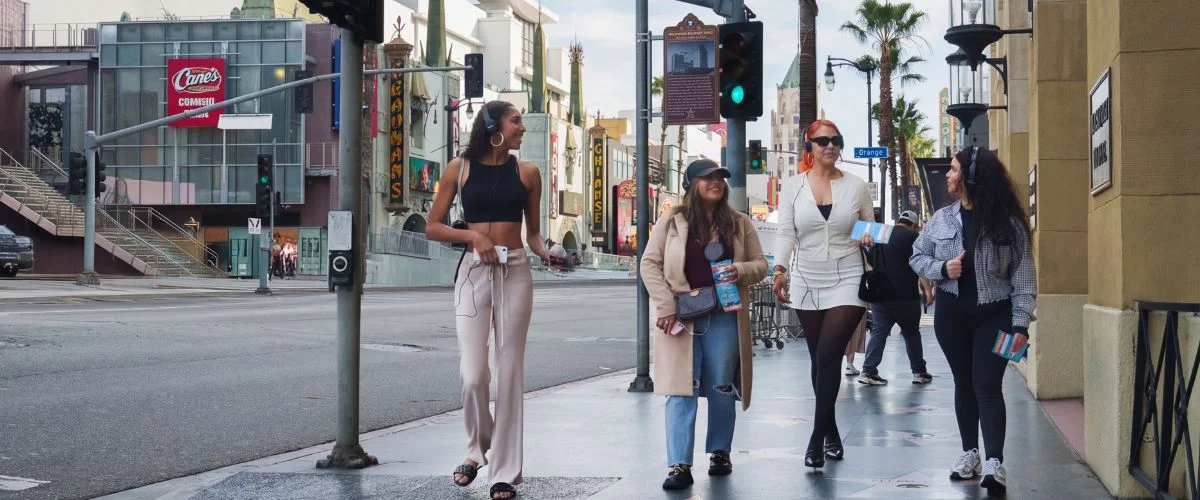
More than 2,700 stars are embedded in the sidewalks along Hollywood Boulevard, stretching 15 blocks through the heart of Hollywood. Most people walk the whole thing in under an hour and leave feeling like they missed something — because they did.
A little context changes everything. Suddenly that busy boulevard becomes the place where the film industry took root, where the golden age of Hollywood played out in real time, and where some of the biggest names in entertainment history are literally set in stone beneath your feet. The stories behind those stars are what make the walk worth taking.
In this guide we cover the top 10 landmarks on the Hollywood Walk of Fame, practical tips for planning your visit, and how our self-guided walking tour brings it all to life.
Our Self-Guided Walking Tour of Hollywood Walk of Fame brings the Walk of Fame to life with professionally narrated stories available in 11 languages — for just $9, or completely free when you book any of our Hollywood tours.
What Is the Hollywood Walk of Fame
The Hollywood Walk of Fame is a 1.3-mile stretch of sidewalk running along Hollywood Boulevard and Vine Street, with more than 2,700 coral-pink terrazzo stars honoring legends across film, television, music, radio, and live theatre. It draws around 10 million visitors a year, making it one of the most visited attractions in the world.
Check out our complete Walk of Fame guide for the full history, fascinating facts, and everything you need to know about the star selection process.
What to See Along the Hollywood Walk of Fame
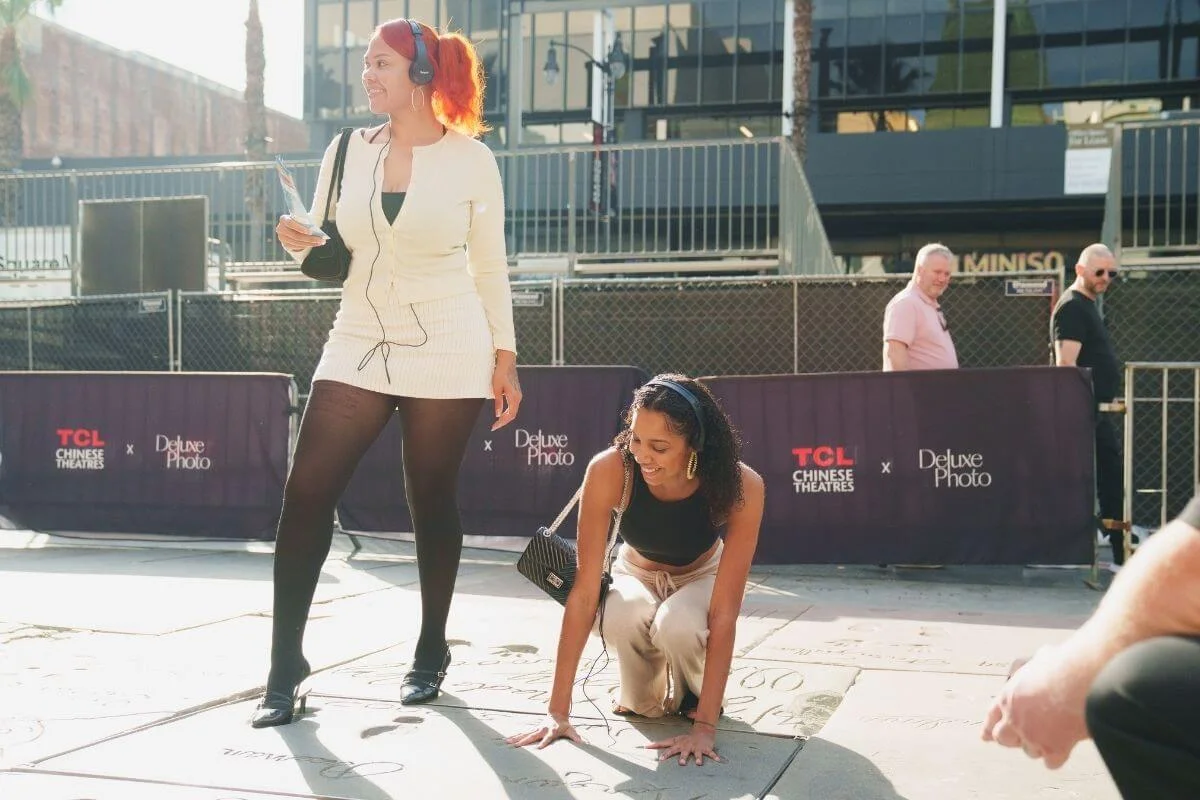
1. TCL Chinese Theatre
Formerly known as Grauman’s Chinese Theatre, this is the most photographed spot on the entire boulevard. The TCL Chinese Theatre opened in 1927 and has hosted some of the biggest film premieres in Hollywood history — and the forecourt out front is where you’ll find over 200 celebrity handprints, footprints, and signatures pressed into cement. Marilyn Monroe, Humphrey Bogart, Frank Sinatra, and more recently the cast of the Avengers have all left their mark here.
2. The Dolby Theatre
The Dolby Theatre is the official home of the Academy Awards and one of the most recognized entertainment venues in the world. This is where the red carpet rolls out every Oscar season and where the film industry gathers to honor its best.
The building is open to visitors year-round and guided tours take you inside the auditorium, the Governors Room, and the VIP lounge — the same spaces you’ve watched on television every awards season. Check out our complete guide to the Dolby Theatre before you go.
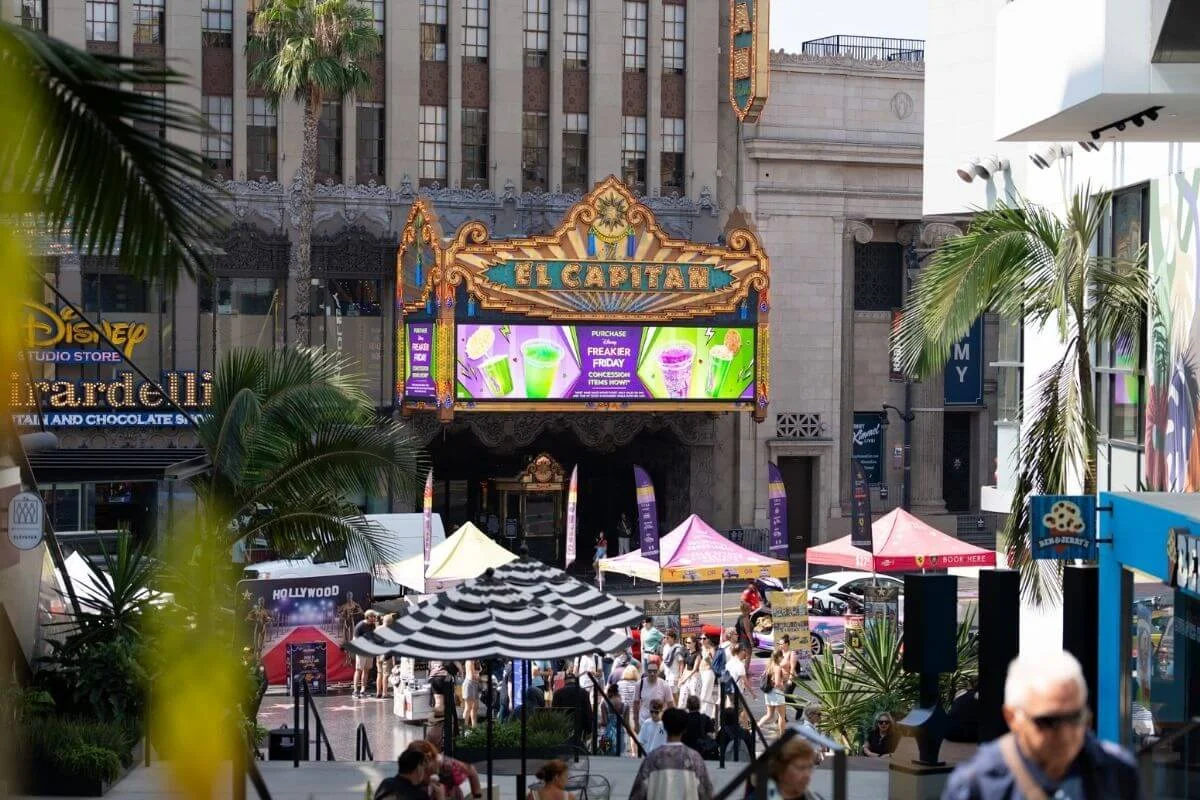
3. El Capitan Theatre
Directly across the boulevard from TCL Chinese Theatre, El Capitan is one of the last surviving movie palaces from old Hollywood still operating as a working cinema. Built in 1926, it originally hosted live theatre before transitioning to film.
Disney restored it in the early 1990s to its original grandeur — ornate interiors, live pre-show entertainment, and a programming slate built around premieres and classic screenings. Even if you don’t catch a film, the facade is one of the most striking on the entire boulevard.
4. The Egyptian Theatre
Built in 1922, the Egyptian Theatre’s unique architecture was inspired by the Egyptian Revival craze that swept the US following the discovery of Tutankhamun’s tomb. The theatre hosted one of the earliest major Hollywood movie premieres — a 1922 screening of Robin Hood starring Douglas Fairbanks that helped popularize the red-carpet premiere format we still see today.
Elvis Presley’s star on the Walk of Fame sits right out front, making it a natural stop for any history buff walking the boulevard. Recently restored and back in operation, the theatre continues to screen films and remains one of the most historically significant buildings on Hollywood Boulevard.
5. The Pantages Theatre
At the eastern end of the Walk of Fame, where Hollywood Boulevard meets Vine Street, the Pantages Theatre has been one of LA’s premier entertainment venues since 1930. The interior is a stunning example of Hollywood Regency architecture — grand, ornate, and completely over the top in the best way.
The Pantages hosted the Academy Awards for over a decade in the 1950s and today draws major Broadway touring productions. If you’re visiting LA and want to catch a show, this is the venue. Even a quick look at the marquee and facade from the sidewalk is worth the short walk from the main cluster of attractions.
6. Capitol Records Building
Walk north on Vine Street and you’ll spot one of the most recognizable buildings in Los Angeles — the Capitol Records Tower, completed in 1956 and designed to resemble a stack of vinyl records topped with a stylus. It’s one of the first circular office buildings ever constructed in the United States and remains an active recording facility today. Frank Sinatra, Nat King Cole, and the Beach Boys all recorded inside. The building sits just off the Walk of Fame but is a short detour that connects you directly to the history of the American music industry.
7. Hollywood Roosevelt Hotel
The Hollywood Roosevelt has been standing at 7000 Hollywood Boulevard since 1927 and hosted the very first Academy Awards ceremony in 1929, making it one of the oldest surviving pieces of Hollywood history on the boulevard. Marilyn Monroe shot one of her earliest commercial campaigns by the pool, and her star on the Walk of Fame sits directly outside the entrance.
The lobby is open to the public — stepping inside feels like going back in time to when this stretch of Hollywood Boulevard was the center of the entertainment world. For more stops that bring LA’s movie history to life, our most romantic movie locations guide is worth a read.
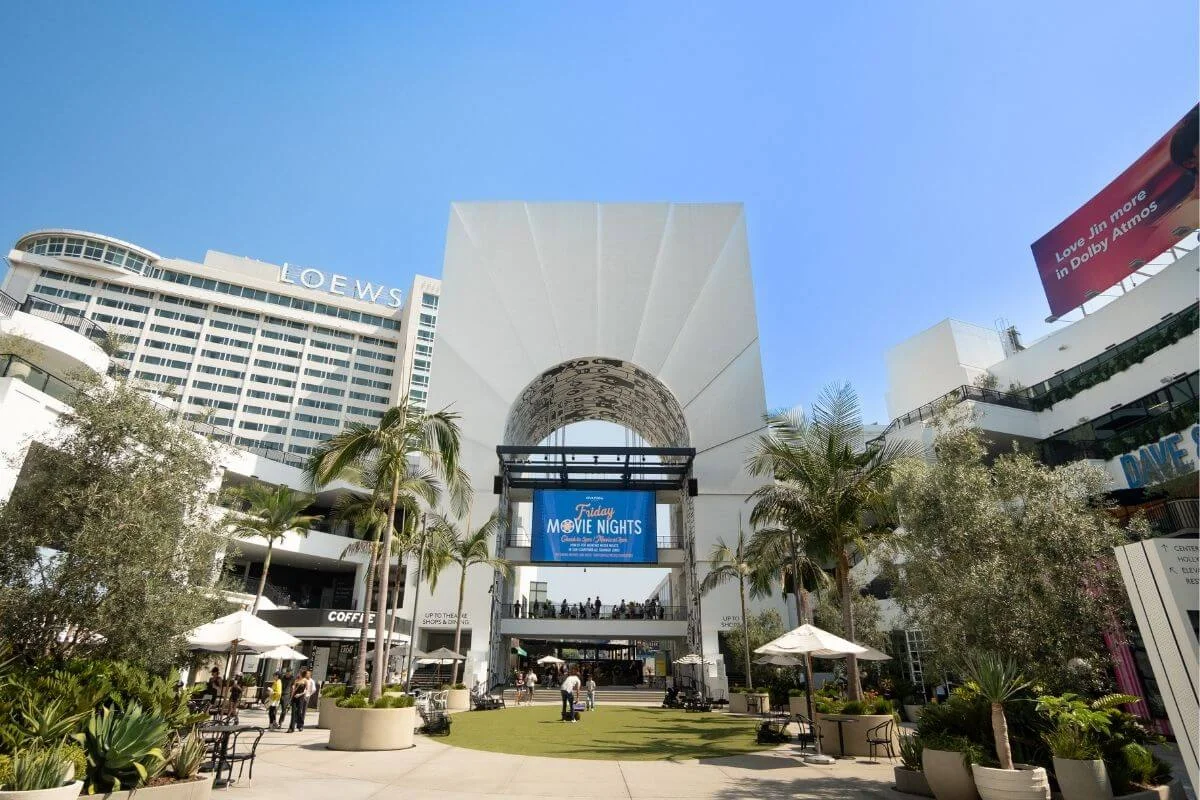
8. Ovation Hollywood
Ovation Hollywood — formerly Hollywood & Highland — is the large open-air complex sitting at the intersection of Hollywood Boulevard and Highland Avenue. It’s the central hub of the Walk of Fame area, home to restaurants, shops, and the Dolby Theatre itself. The upper terraces offer some of the best views of the Hollywood Sign from street level, framed by the archways of the complex. It’s a good spot to take a break, grab a bite, and get your bearings before continuing along the boulevard.
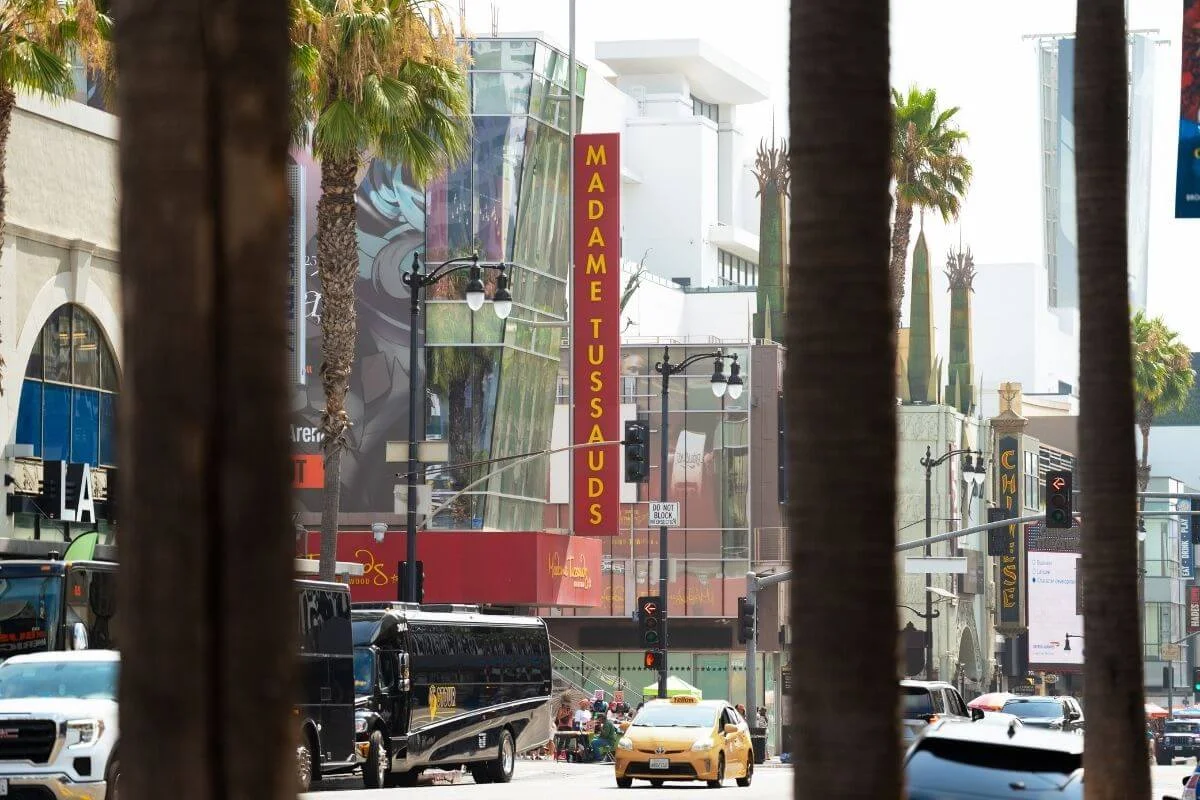
9. Madame Tussauds Hollywood
For a close and personal encounter with your favorite celebrities — without the unpredictability of an actual sighting — Madame Tussauds Hollywood delivers. Sitting right on Hollywood Boulevard, the attraction features remarkably detailed wax figures of everyone from classic Hollywood legends to modern pop culture icons. It’s a fun stop for families and anyone who wants an interactive experience in the middle of their walking tour. The photo opportunities alone make it worth a visit.
10. Hollywood & Vine
The intersection of Hollywood Boulevard and Vine Street is one of the most world-famous corners in the United States. In the early days of the film and radio industry, this crossroads was the beating heart of Tinseltown — studios, talent agencies, and broadcast networks all clustered around it.
Today it marks the eastern boundary of the Walk of Fame and is a top LA landmark in its own right. The Metro Red Line station here also makes it a practical starting point if you’re coming from Downtown LA or Santa Monica without a car.
What Most Visitors Miss on the Walk of Fame
Most people walk the Walk of Fame looking down at names they recognize and move on when they don’t. But the details hiding in plain sight are what make the boulevard genuinely interesting.
The Five Star Categories
Every star features one of five symbols beneath the honoree’s name — a motion picture camera, a television set, a radio microphone, a theatrical mask, or a music record. Most visitors never notice them. They tell you exactly which corner of the entertainment industry that person shaped, and they make the stars themselves feel like more than just names in the pavement.
Behind-The-Scenes Names
The Walk of Fame isn’t just actors. Composers, directors, cinematographers, choreographers, and producers all have stars — many of them right alongside the household names. If you slow down and read, you’ll find the people who built the film industry rather than just appeared in it.
Gene Autry’s Five Stars
The singing cowboy holds the record for the most stars on the Walk of Fame with five — one in each category. No one else has matched it.
Muhammad Ali’s Star
Ali’s star is the only one on the Walk of Fame not embedded in the sidewalk. At his request it was mounted on a wall at the Dolby Theatre — because he shares his name with the Prophet Muhammad and did not want it walked upon.
Stars That Face Different Directions
The stars aren’t all oriented the same way. The design was intentional — so that visitors walking in either direction along the boulevard can read them without having to cross the street or double back.
The Best Way to Experience the Hollywood Walk of Fame
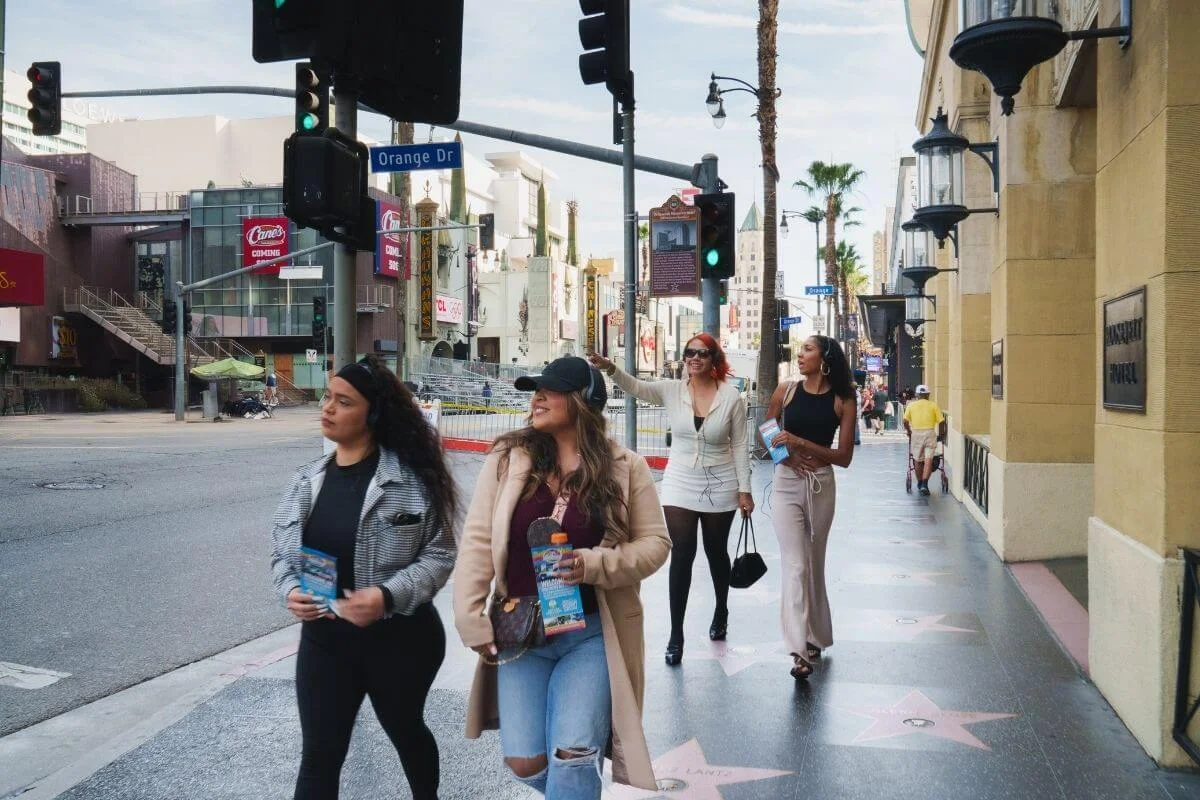
Walking the boulevard on your own is free and completely doable — but without context, most of what makes it interesting stays invisible. The names, the buildings, the history layered into every block of Hollywood Boulevard all mean more when someone is telling the story behind them.
That’s where our Self-Guided Walking Tour of Hollywood Walk of Fame comes in. Using your smartphone, you’ll unlock professionally narrated stories, history, and insider facts as you walk — at your own pace, on your own schedule, with no set meeting point and no group to keep up with. The full experience runs up to two hours, but you can start, pause, or stop whenever you like. Whether you have 30 minutes or a full afternoon, the tour fits around your plans.
It’s available in 11 languages and starts anywhere along the Walk of Fame — making it one of the most flexible ways to explore Hollywood Boulevard as a solo traveler, with family, or as part of a larger trip.
At just $9, it’s one of the most affordable ways to add real depth to your time on the boulevard. And if you’re already planning to book one of our Hollywood tours, it’s completely free — making it a natural addition to a full day of sightseeing in LA.
Tips for Your Hollywood Walking Tour
Best Time to Visit
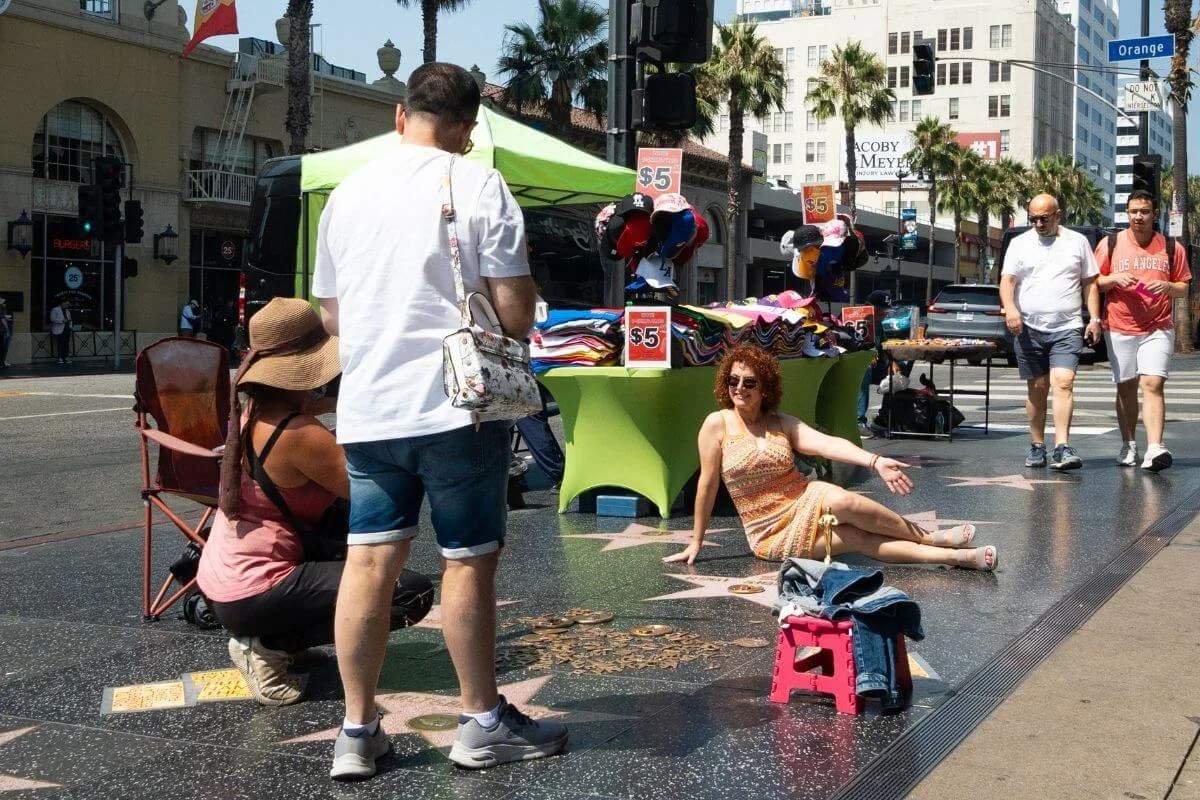
Start early. Hollywood Boulevard is at its best in the morning — smaller crowds, better light for photos, and more room to actually take in the landmarks without navigating through tour groups.
How Long Does the Walk Take
The Walk of Fame is completely self-paced — you can cover the highlights in under an hour or spend an entire morning exploring at your leisure. Our self-guided walking tour covers the full experience in up to two hours, but you’re in control the whole time. Stop, skip, or pause whenever you like — it works around your schedule, not the other way around.
Getting There and Parking
Street parking along the boulevard fills up fast. Our Hollywood Walk of Fame parking guide covers the best lots, rates, and walking distances. Prefer public transit? The Metro Red Line stops directly at Hollywood & Highland and Hollywood & Vine — both right on the Walk of Fame.
See Hollywood’s Most Iconic Landmarks on Our Hollywood Tours
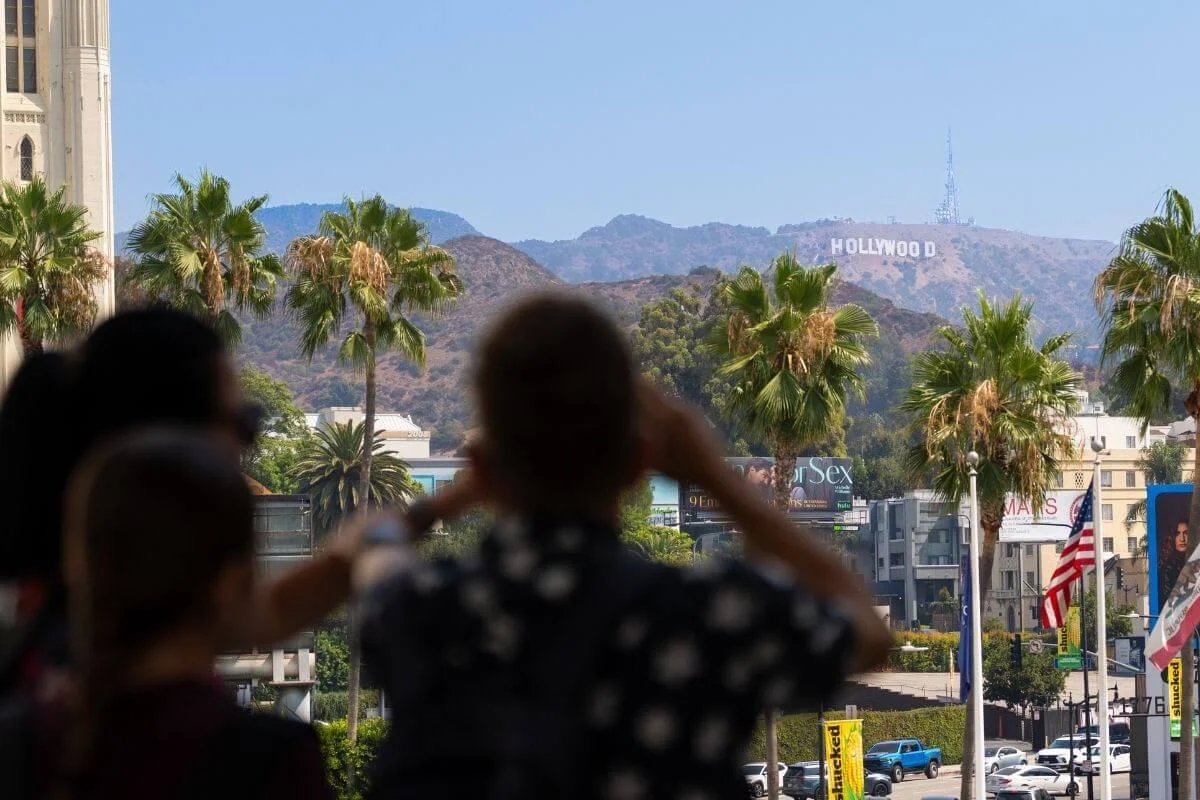
Hollywood Boulevard is one of the most famous streets in the world — but it’s only a fraction of what LA has to offer. Celebrity homes in Beverly Hills, the Sunset Strip, the Hollywood Sign, Rodeo Drive — the real Hollywood extends far beyond the Walk of Fame, and the best way to see it is with a local who knows where to look.
Our Hollywood, Beverly Hills & Celebrity Homes Open Air Tour takes you through the neighborhoods where Hollywood’s biggest names actually live, on a small-group open-air van with a local driver-guide who knows the stories behind the gates. Prefer to cover more ground?
The Half Day Best of LA Tour packs five and a half hours of LA’s best landmarks, neighborhoods, and stops into a single morning.
And if you’re looking for something more personal, our VIP Private SUV Experience gives you a chauffeur-guide, hotel pickup, and a fully private tour itinerary built around what you actually want to see.
Every one of our tours includes the Self-Guided Walking Tour of Hollywood Walk of Fame completely free!