
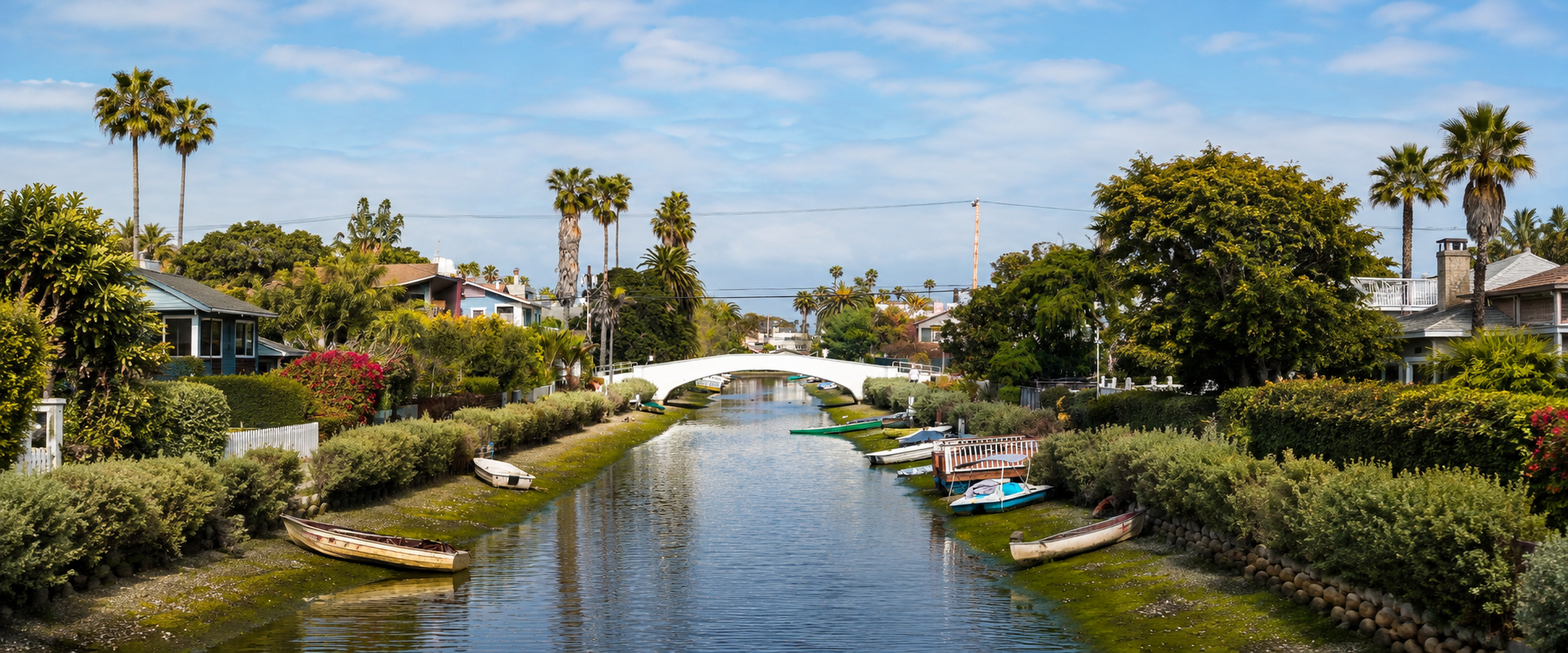
The Venice Canals are six man-made waterways a few blocks inland from the Venice Beach boardwalk, lined with homes, gardens, and arched footbridges. The walkways are public and free to stroll at any hour, and Abbot Kinney Boulevard, the mile-long strip of boutiques and restaurants named for Venice’s founder, is a short walk away.
In 1905, Abbot Kinney opened Venice of America, a beach resort with gondoliers rowing visitors through its canals. All were later paved into streets. Today, six canals survive just south of Kinney’s original grid, a residential pocket of footbridges and waterfront gardens a few blocks from the boardwalk crowds.
Below you’ll find a walking route over the footbridges, the story of how these six canals outlasted Kinney’s own, and where to eat, shop, and park on Abbot Kinney.
After you’ve seen the canals, make sure you see the rest of LA’s highlights. Our Half Day Best of LA Tour puts a local guide behind the wheel, and we cover stops like Beverly Hills and Rodeo Drive, The Grove and the Original Farmers Market, and Griffith Observatory for Hollywood Sign views.
See all of our tours and pick the one that fits the day.
Where the Venice Canals Are
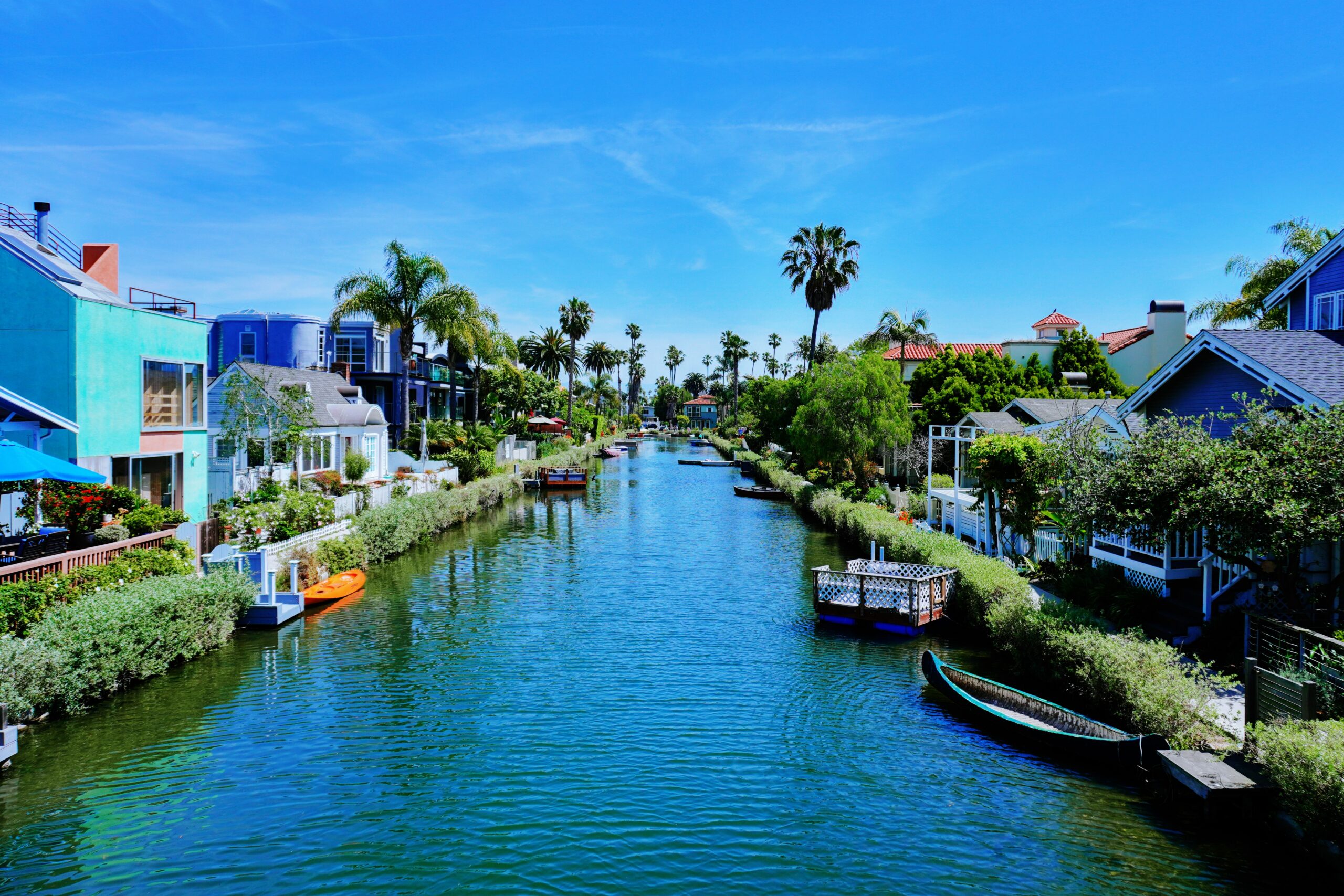
The Venice Canals are a few minutes’ walk inland from the Venice Beach boardwalk, and they feel like a different neighborhood. Instead of street performers and the skate park, you get narrow waterways, rowboats tied up along the banks, and front gardens that run right up to the walkways. That’s the Venice Canal Historic District, a residential pocket of Venice tucked between Venice Boulevard and Washington Boulevard.
Getting There From the Venice Beach Boardwalk
From the boardwalk, head inland along Venice Boulevard. LA Magazine suggests entering at South Venice Boulevard and Dell Avenue, where Dell crosses the water on its own bridges and you can pick a canal and start walking. Walkways also open off Pacific Avenue and Strongs Drive on the west side, and they’re public, so you’re free to wander any of them.
How the Canals Connect to Abbot Kinney Boulevard
Abbot Kinney Boulevard runs about a mile from Main Street to Washington Boulevard, the same street that marks the canals’ southern edge. Start with the canals, and the boulevard is a short walk away when you’re ready for coffee or lunch.
The History of the Venice Canals
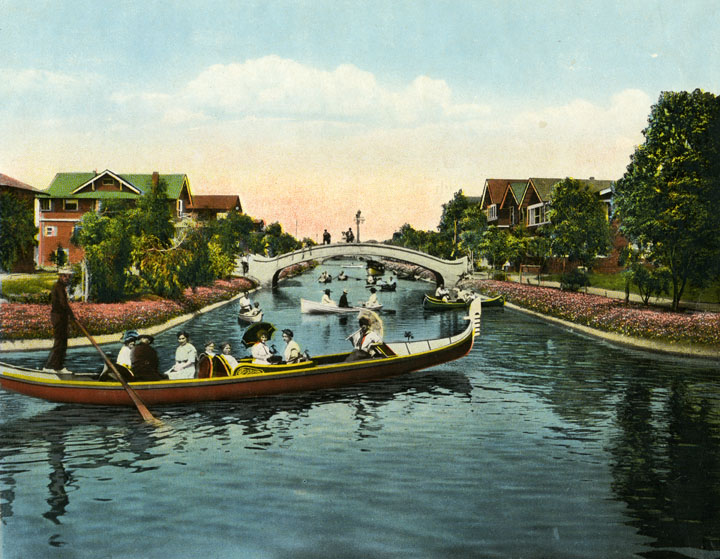
Venice of America was the dream of Abbot Kinney, a tobacco millionaire who wanted a resort modeled on the canals of Venice, Italy. He dredged his canals out of saltwater marshland and opened Venice of America on July 4, 1905.
Abbot Kinney’s Venice of America
The resort opened with seven saltwater canals, nearly two miles of canals in all, laid out in a loose grid, with the Grand Canal ending at a saltwater lagoon. Tourists paid for gondola rides, and the gondoliers sang to them in Italian as they rowed.
Kinney also built an amusement pier off Windward Avenue with a dance hall, an auditorium, and the Ship Cafe, a restaurant built to look like a Spanish galleon. He died in November 1920. A month later, the pier burned. It was rebuilt as an amusement pier and ran until 1946, when its lease on the tidelands ran out and the city closed it.
Why the Original Canals Were Paved Over
By the 1920s, the canals had turned into a problem. The water circulated poorly and was often polluted, and more visitors were arriving by car in a town designed for walking. The City of Venice decided to fill the canals and turn them into roads. Canal residents fought the plan in court for four years, and by the time the city won, Venice had joined the City of Los Angeles.
On July 1, 1929, trucks dumped the first loads of dirt into the Coral Canal, and the original canals were paved over by the end of the year. Coral Canal became Main Street, Venus Canal became San Juan Avenue, and Lion Canal became Windward Avenue. The old lagoon became the traffic circle at Windward and Pacific Avenues.
The Six Canals That Survived
The canals you walk today aren’t Kinney’s. Other developers dug another set of canals just south of Venice of America soon after it opened, sold lots there as the Venice Canal Subdivision, and linked their canals to Kinney’s through the Grand Canal. The Venice Canals Association traces them to a project called the New Amsterdam Canals.
It came down to money. In 1929, too few people lived along these six to pay the special property assessment that funded the paving.
Restoration and the National Register
By 1940 the remaining canals had fallen into disrepair, and the city had condemned their sidewalks. For decades, proposals to renovate the canals failed over funding and who should pay. The district was listed on the National Register of Historic Places in 1982. Then in 1992 the canals were drained and rebuilt with new walls and sidewalks, and the canals re-opened in 1993.
Today the canals are public property owned by the City of Los Angeles, which also controls the water. Seawater flows in from the Ballona Lagoon through tide gates near Marina del Rey.
How to Walk the Venice Canals
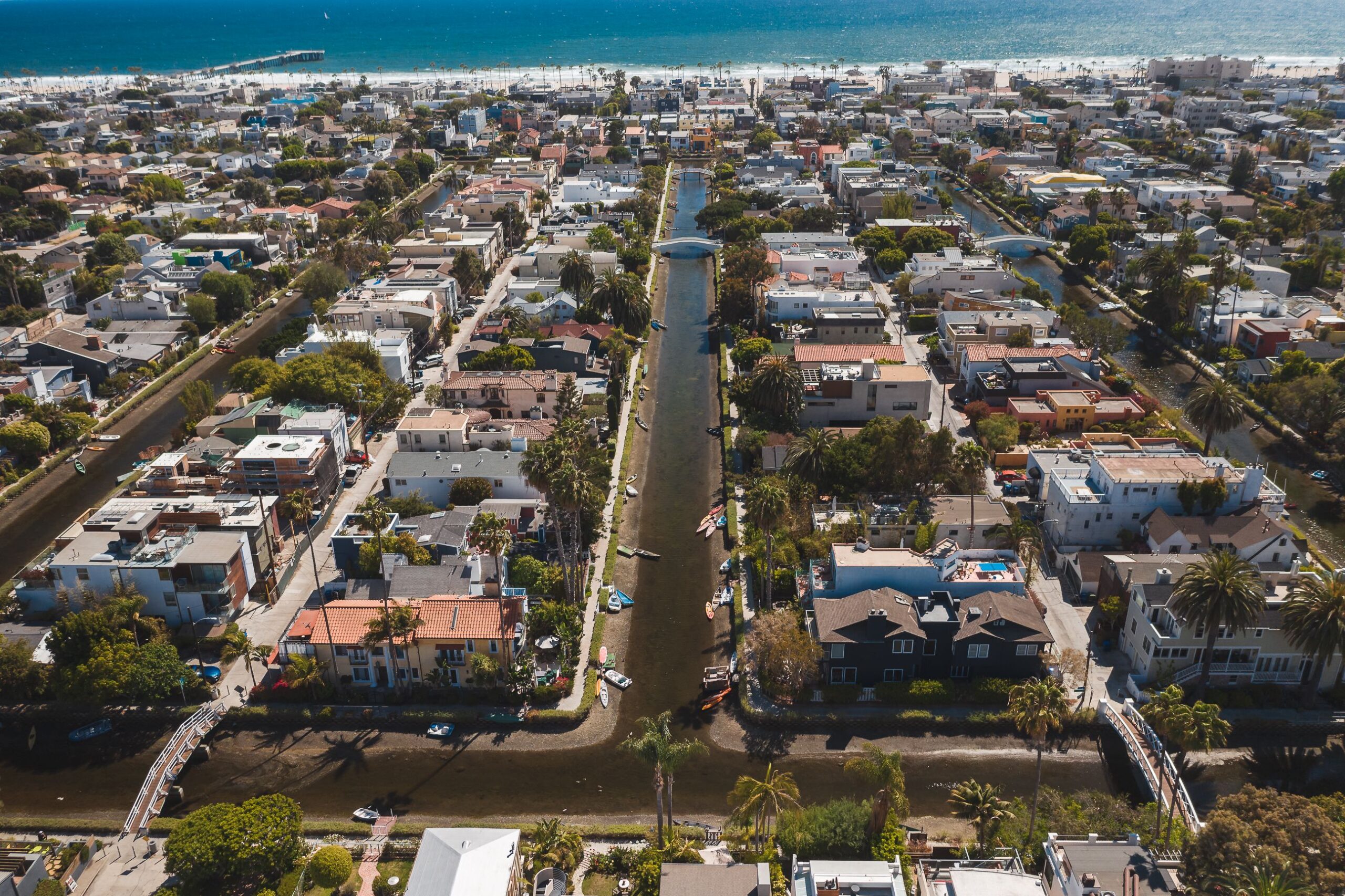
The canals are free to walk year-round, with no ticket or reservation, which puts them on any list of free things to do in Los Angeles. The Venice Canals Association suggests allowing at least 45 minutes to cross a few bridges and walk a few canals. Along the way you’ll pass Venetian-style villas, Spanish casitas, rambling beach houses, glass modern homes, and a few one-story bungalows from the early 1900s.
The Six Canals by Name
There are four east-west canals, the Carroll Canal, Linnie Canal, Howland Canal, and Sherman Canal, and two north-south canals, the Grand Canal on the west side of the district and the Eastern Canal on the east. Walkways line both banks, and whitewashed arched bridges cross the water.
Dell Avenue is the only street you can drive through the district. It crosses all four east-west canals on its own bridges, so it makes an easy landmark.
A Walking Route Over the Footbridges
Start at South Venice Boulevard and Dell Avenue and work your way south. Walk each east-west canal out along one bank and back along the other, crossing on the footbridges, then follow the Grand Canal or the Eastern Canal to reach the next one. The whole loop is flat. You’ll finish near Washington Boulevard, a short walk from Abbot Kinney.
Linnie Canal Park
Linnie Canal Park sits right on the walk, at the corner of Linnie Canal and Dell Avenue. It’s a small city park with a children’s play area and a pond, open dawn to dusk. For restrooms, plan on the cafes over on Abbot Kinney, since the walkways run through a residential neighborhood.
Walking Etiquette Along Private Homes
The canals are a neighborhood first. Front gardens open right onto the walkways. The Venice Canals Association asks visitors to respect residents’ privacy, clean up after dogs, and use the trash cans along the canals. The sidewalks are narrow, so walk your bike and carry your skateboard.
You’ll see mallard ducks, herons, egrets, and cormorants along the water. Skip the bread. Feeding wildlife is against the law here, even if it’s rarely enforced.
Boating, Kayaking, and Swimming in the Venice Canals
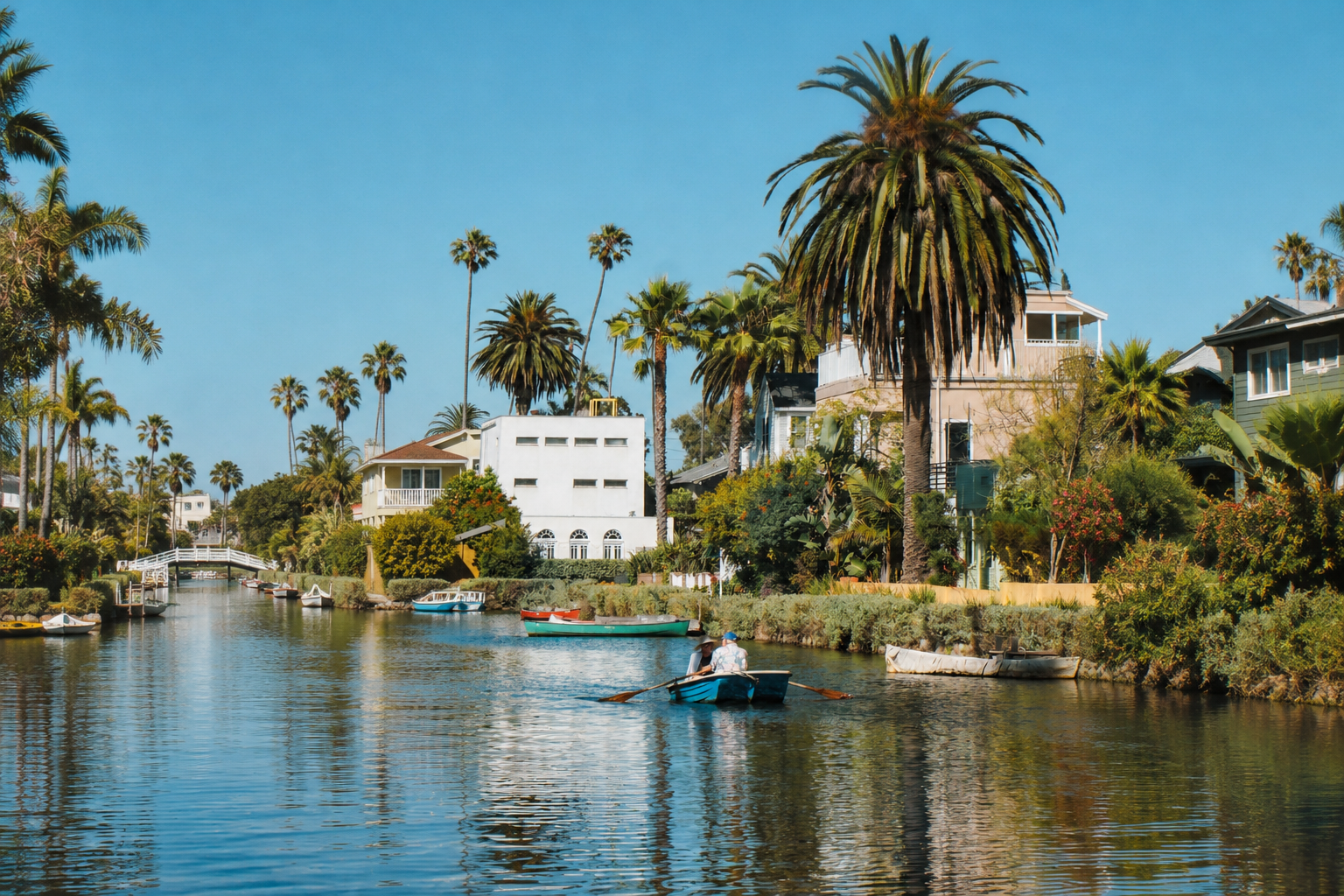
You can paddle the canals in a kayak, canoe, rowboat, or other human-powered boat. You just have to bring your own, since the canals are zoned residential and there are no rentals. Motorboats aren’t allowed. Boats go in at the public launch ramp at 501 North Venice Boulevard, not from the sidewalks, which protects the saltbush and wetland plants along the banks.
Swimming and fishing aren’t advised, for health and safety reasons. The water runs about 4 feet deep when the canals are full, and the city drains and refills them at least twice a week, usually on Mondays and Fridays, so the water level changes from day to day.
Abbot Kinney Boulevard
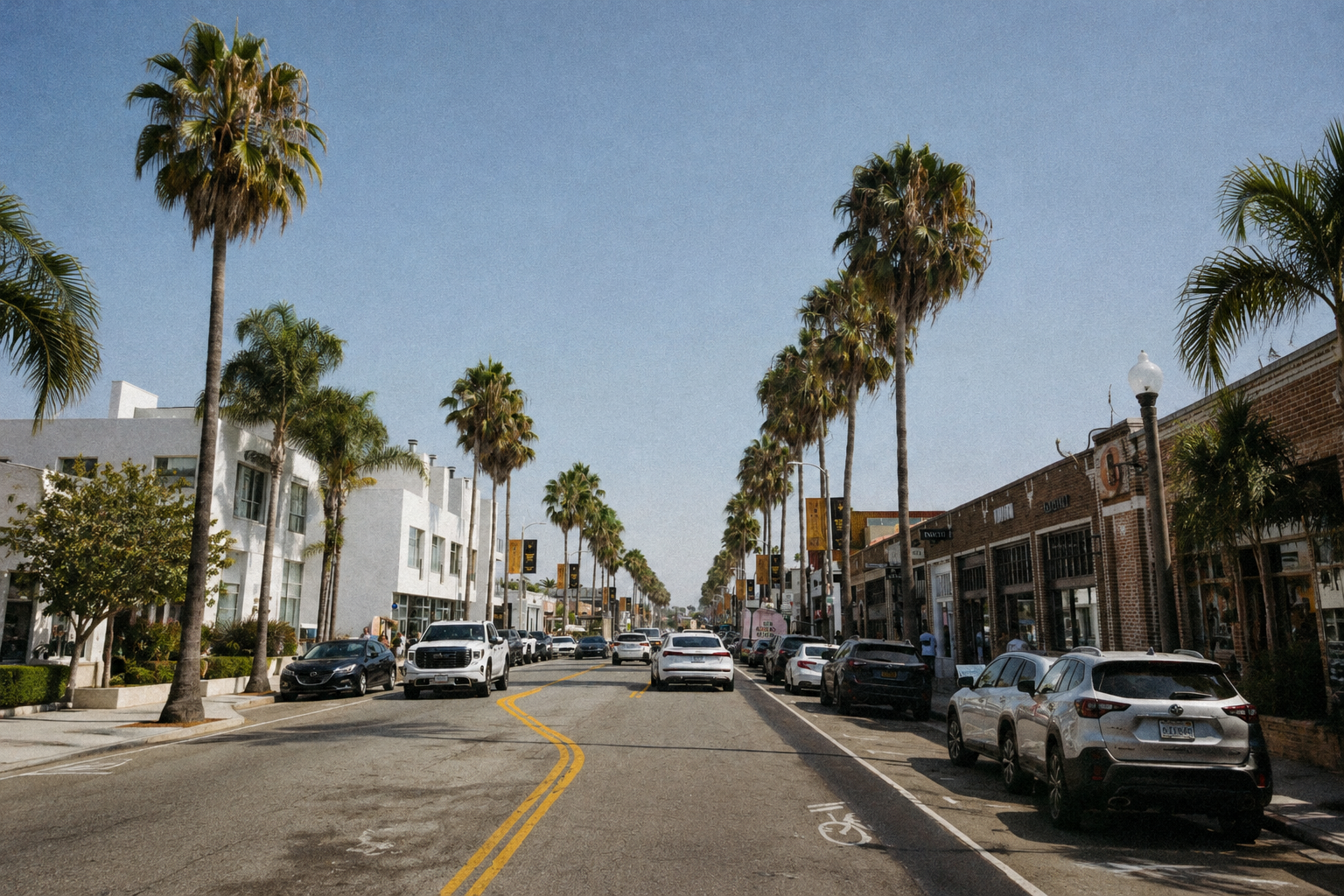
Abbot Kinney Boulevard is Venice’s main street for shopping and eating, a mile of boutiques, galleries, cafes, and restaurants a few blocks inland from the beach. Big murals cover the side walls and alley entrances.
Who Abbot Kinney Was
The boulevard is named for the same Abbot Kinney who built Venice of America, a tobacco millionaire who was also a conservationist. The street was known as West Washington Boulevard until 1991, when it was renamed in his honor.
Shopping and Eating on Abbot Kinney
Independent shops sit next to national brands, so you’ll find surf labels, ceramics, vintage clothing, and design stores in the same few blocks. The popular restaurants fill up fast, especially at brunch and dinner, so book ahead if there’s a place you have your heart set on.
First Fridays and the Abbot Kinney Festival
First Fridays bring around two dozen food trucks to the boulevard from 5 to 9 p.m., and shops stay open late. It’s free, and the city’s First Friday Food Truck Fest listing has the current schedule.
The Abbot Kinney Festival is the boulevard’s biggest yearly event, a free street fair held on a Sunday in late September. It returned in 2026 after two years off, with proceeds going to Venice youth and arts programs.
Parking and Getting to the Venice Canals
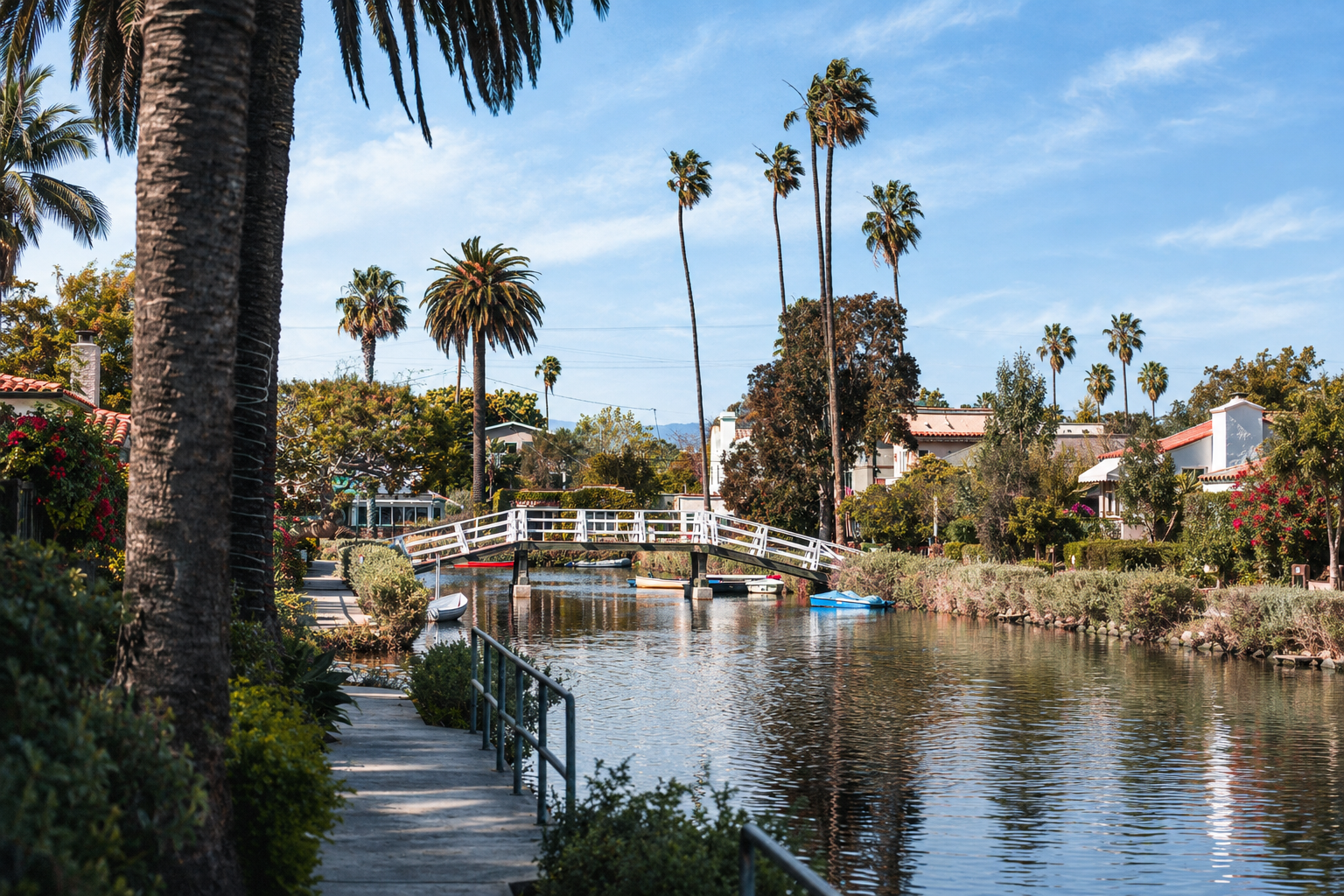
There’s no visitor parking inside the canal district. Look for street parking around the edges, on Venice Boulevard, Washington Boulevard, or Pacific Avenue, or use one of the public lots nearby. Parking on Abbot Kinney is metered and mostly limited to two hours, so plan for that if you’re doing both.
A bike works well, as long as you walk it on the narrow canal paths. For other options, see our guide to getting around Los Angeles without a car.
Best Time to Visit the Venice Canals and Abbot Kinney
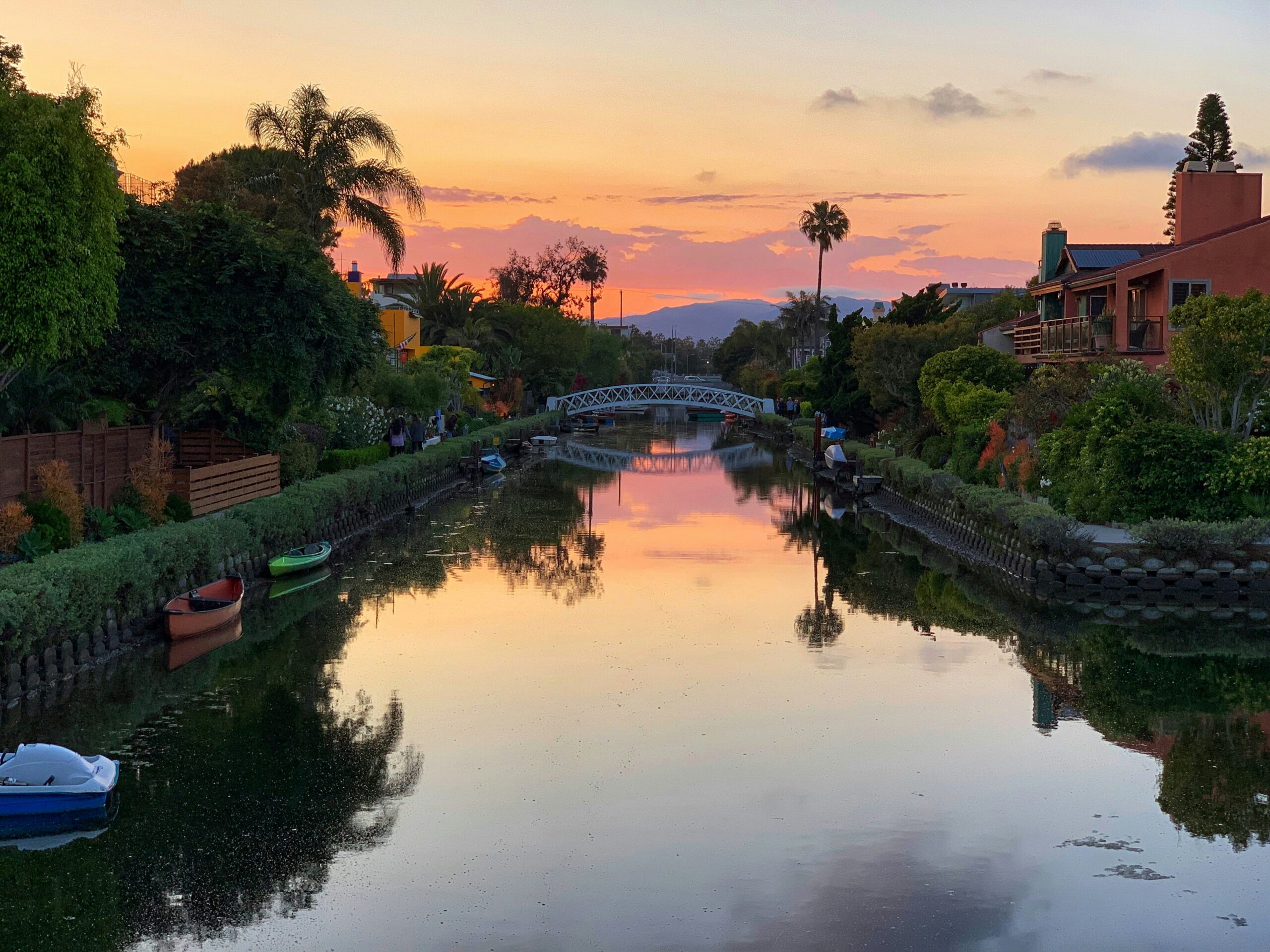
Go early in the morning or around sunset. Mornings bring herons and egrets fishing along the banks, and the light on the water is at its best in the early evening.
Holidays add something extra. Residents decorate the bridges for the winter holidays and Valentine’s Day, and the Venice Canals Association runs events like Canaloween and a Fourth of July rubber duck race.
More Things to Do Around Venice
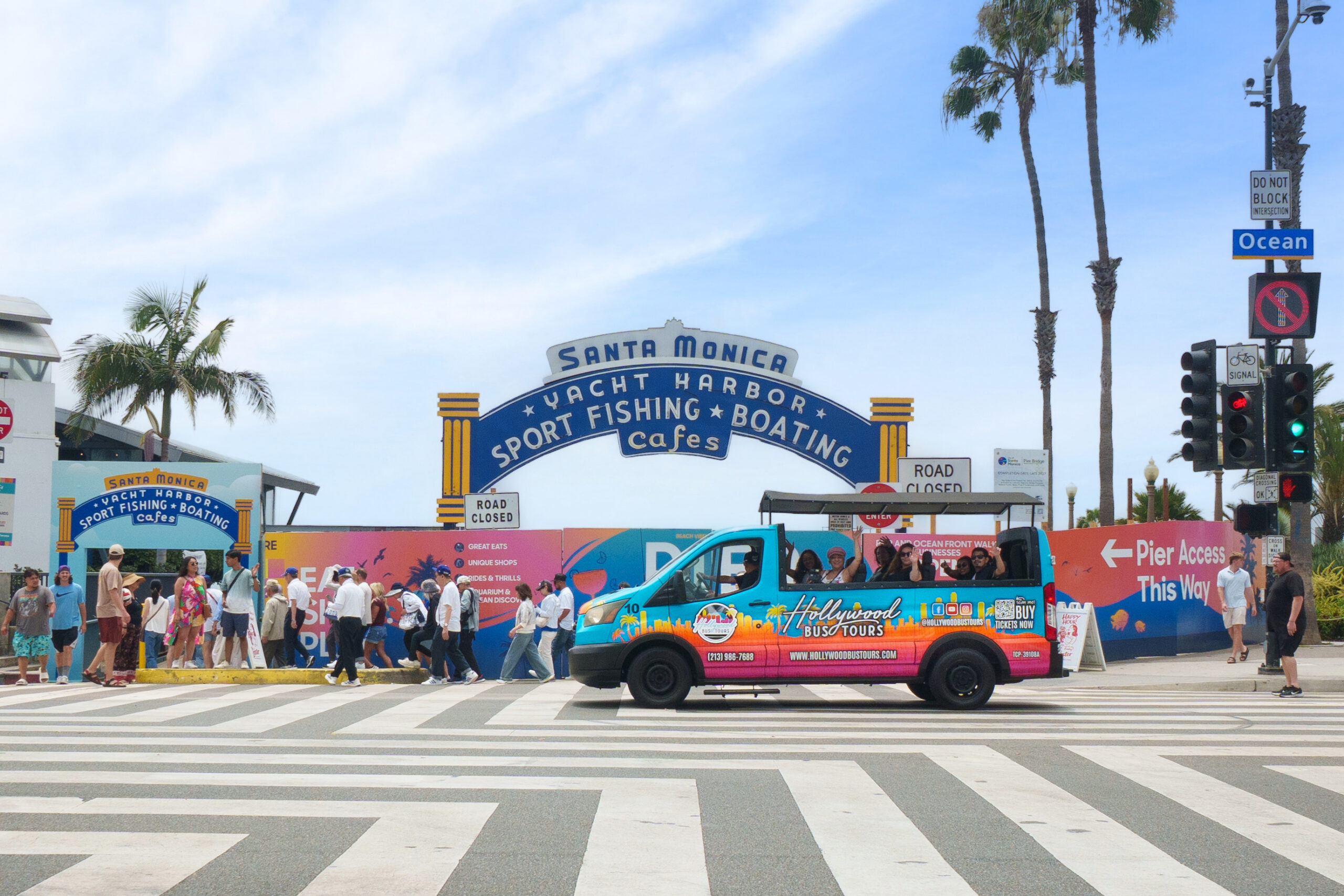
Venice sits just south of Santa Monica, so the canals and Abbot Kinney pair easily with a day on that stretch of coast. Our list of things to do in Santa Monica covers the Santa Monica Pier and the beach up the road, and our 7-day LA itinerary shows where Venice fits in a longer trip.
For the rest of the city, from Beverly Hills to the Hollywood Hills, let a local guide do the driving.
See our tours from Santa Monica and book your seat.
FAQ
Should you visit the Venice Canals?
It’s an easy pick if you’re already at Venice Beach. The Venice Canals in Los Angeles are free, a few minutes’ walk from the boardwalk, and much quieter, with footbridges and gardens along the water.
Are the Venice Canals open to the public?
They are. The canals and walkways are public property owned by the City of Los Angeles, open year-round with no ticket or reservation. The homes along the water are private.
How long does it take to walk the Venice Canals?
Plan on at least 45 minutes to cross a few bridges and walk a few canals. Walking all six canals takes about an hour at an easy pace.
Why does Venice have canals?
The first canals were built in 1905 by developer Abbot Kinney for his resort, Venice of America, modeled on the canals of Venice, Italy. His canals were filled in 1929 and paved into streets. The six that remain were built just south of them by other developers.
Can you kayak in the Venice Canals?
You can, if you bring your own kayak, canoe, or other human-powered boat. There are no rentals and no motorboats, and boats launch from the public ramp at 501 North Venice Boulevard.
Where do you park for the Venice Canals?
There’s no visitor parking inside the canal district. Use street parking on Venice Boulevard, Washington Boulevard, or Pacific Avenue, or a public lot nearby, then walk in.