
Los Angeles has dozens of film locations open to the public without a studio ticket. Griffith Observatory, the Hollywood Walk of Fame, Rodeo Drive, Union Station, the Bradbury Building, the Millennium Biltmore Hotel, the Santa Monica Pier, and Venice Beach have all appeared in major productions and are free or low-cost to visit.
Most of the LA filming locations you’ve seen on screen don’t require a ticket. The streets, neighborhoods, and landmarks that appear in some of the most recognizable films ever made are the same ones visitors walk through every day. Open parks, working hotels, and public roads have served as backdrops for over a century of film production.
This guide covers the film locations in Los Angeles worth visiting, organized by neighborhood. We walk through Hollywood and Griffith Park, Beverly Hills, Downtown LA, and the Santa Monica and Venice coastline, covering what was filmed at each location, what access looks like, and what to expect when you arrive.
See Mulholland Drive, the Sunset Strip, Beverly Hills, the Hollywood Hills and more on our Hollywood, Beverly Hills, & Celebrity Homes Open Air Tour — with a driver-guide who knows the stories behind every block. Book your spot here.
In This Guide
- Iconic LA Filming Locations in Hollywood and Griffith Park
- Beverly Hills Film Locations You Can Actually See
- Downtown Los Angeles Filming Locations Worth the Trip
- Santa Monica and Venice Filming Locations in Los Angeles
- See Hollywood’s Filming Locations on a Guided Tour
- Frequently Asked Questions
Iconic LA Filming Locations in Hollywood and Griffith Park
The Hollywood neighborhood and the hills above it hold a higher concentration of film locations than anywhere else in the city. Most are free, and several sit within a short drive of each other.
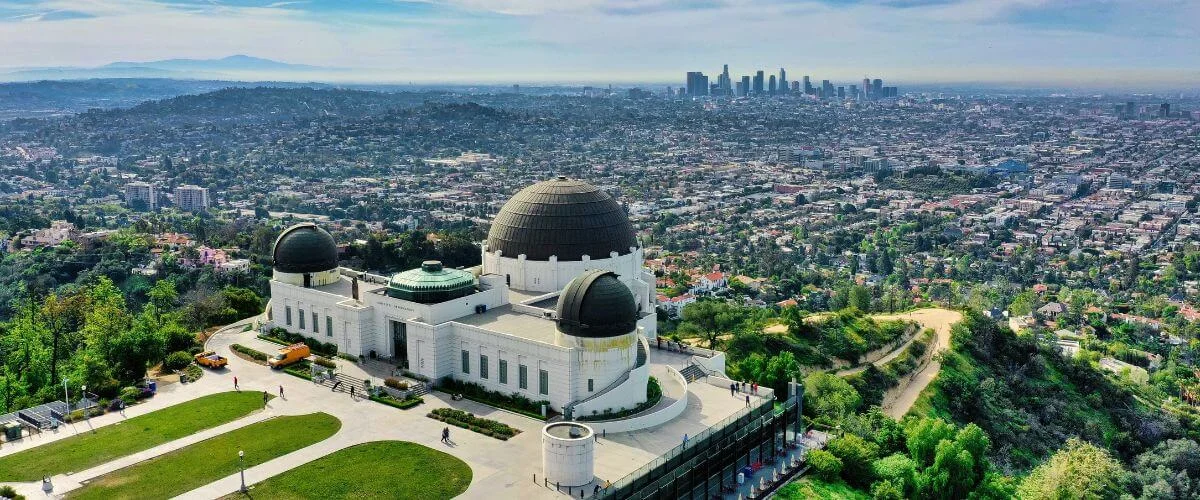
Griffith Observatory
The Griffith Observatory sits on the southern slope of Mount Hollywood and has appeared in more productions than almost any other Los Angeles landmark. La La Land filmed its floating dance sequence here and Rebel Without a Cause used it in 1955. Terminator opened here.
The grounds and interior exhibits are free. Planetarium shows require a ticket. Parking fills fast on weekends — the DASH Observatory shuttle runs from Los Feliz and is the easier option.
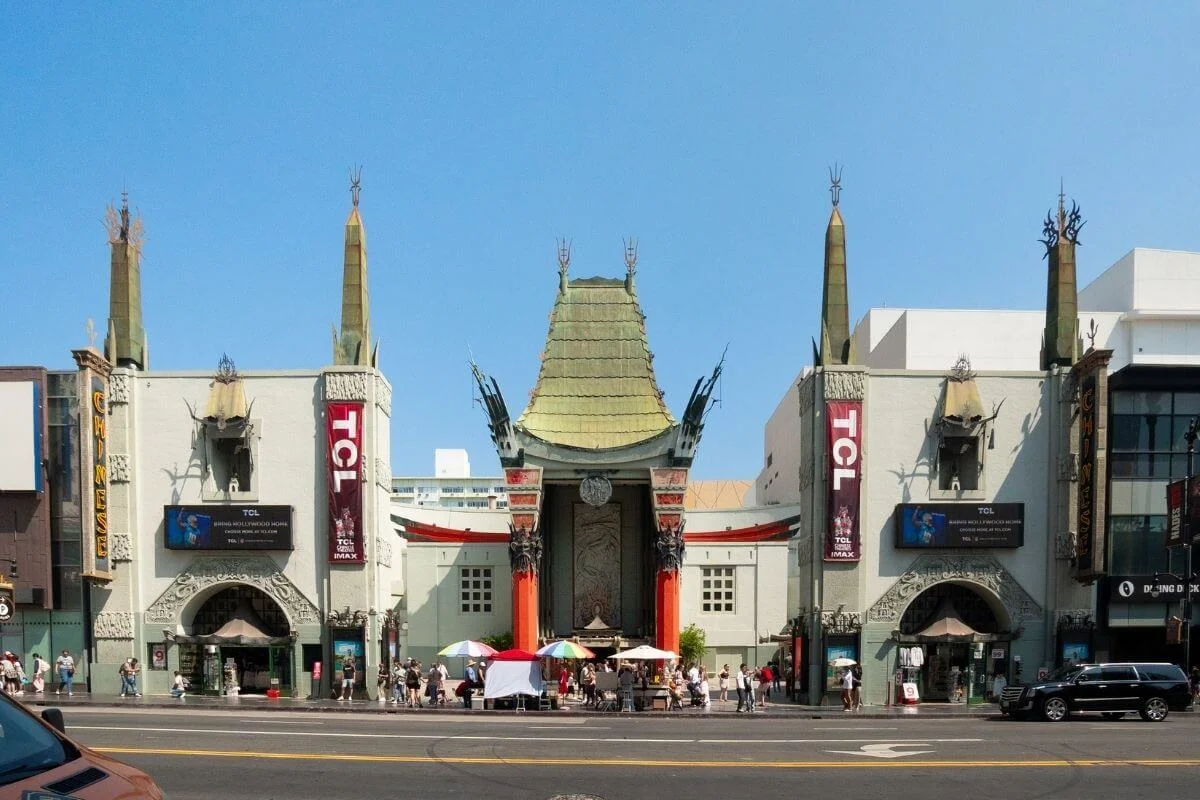
TCL Chinese Theatre and the Hollywood Walk of Fame
The TCL Chinese Theatre is one of the most filmed buildings in Los Angeles. Its forecourt — where celebrity handprints and footprints are pressed into concrete — has appeared in productions ranging from Singin’ in the Rain to La La Land, and the theater’s exterior has stood in for Hollywood itself across decades of film.
The Hollywood Walk of Fame runs about 1.3 miles along Hollywood Boulevard and is accessible at all hours. The surrounding blocks include the Dolby Theatre, home of the Academy Awards ceremony and a filming location that has appeared in productions across decades of Hollywood history.
Mulholland Drive
Mulholland Drive is a real road. It runs along the ridge of the Santa Monica Mountains, separating Hollywood from the San Fernando Valley, and the views it offers over the city are as striking in person as they appear on screen.
David Lynch named his 2001 film after it. The road has appeared in dozens of productions, and driving it gives you a clear sense of why — at certain points, the entire Los Angeles basin opens up below you in both directions. The western stretch from Laurel Canyon toward Coldwater Canyon offers the most cinematic views. The road is public and open at all hours.
Beverly Hills Film Locations You Can Actually See
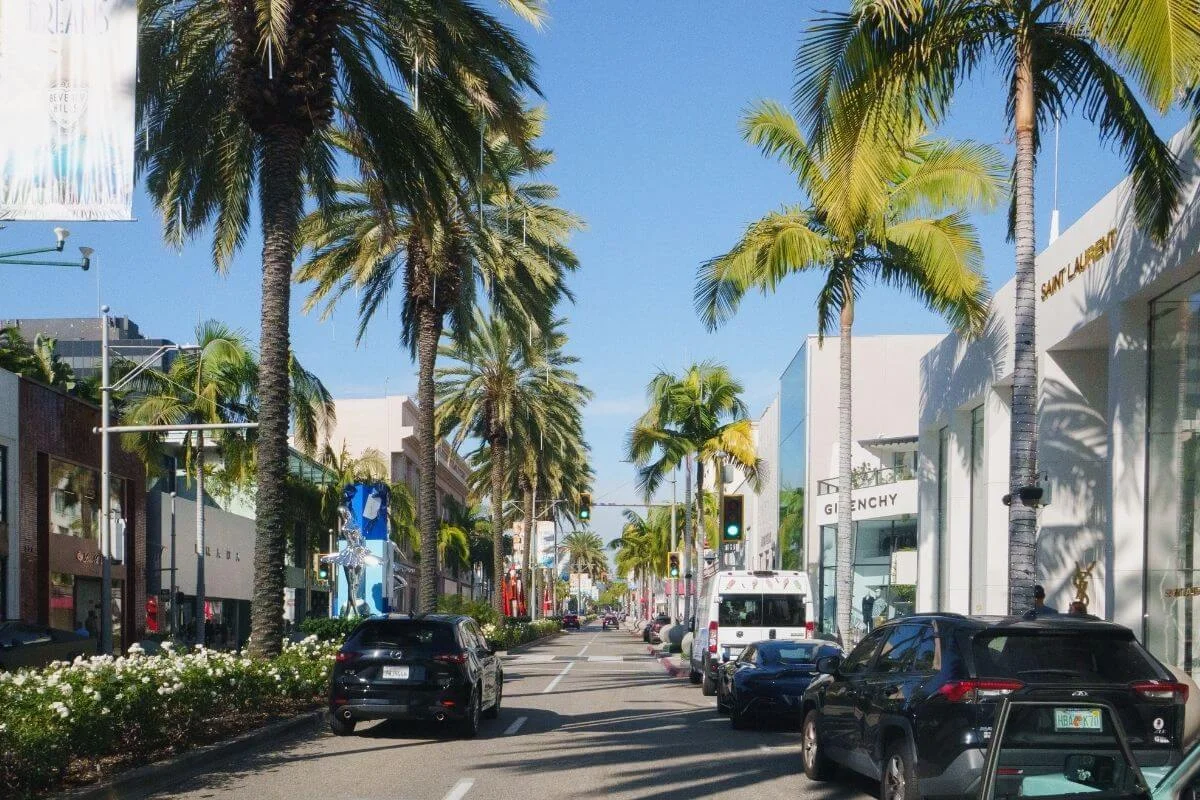
Beverly Hills has served as a film backdrop since the silent era, and several of its most recognizable locations are accessible from the street or open to the public without a reservation.
Rodeo Drive
Rodeo Drive is where Edward Lewis takes Vivian Ward shopping in Pretty Woman — the Beverly Wilshire Hotel, which anchors the south end of the street, is the hotel where Julia Roberts’ character stays throughout the film. Both the hotel exterior and the street itself are exactly as they appear on screen and open to anyone walking through.
Beverly Hills Cop also filmed along this stretch, and Clueless uses Rodeo Drive as shorthand for the world Cher Horowitz inhabits. Our Hollywood, Beverly Hills, & Celebrity Homes Open Air Tour stops here with time to explore and take photos.
The Witch’s House
At 516 North Walden Drive sits one of the most photographed homes in Beverly Hills. The Spadena House — commonly called the Witch’s House — is a storybook structure with a steeply pitched roof, crooked chimney, and deliberately weathered exterior that looks purpose-built for a film set. It was.
The house was constructed in 1921 for Willat Studios in Culver City as offices and dressing rooms for silent film productions. When the studio closed, it was relocated to its current address in Beverly Hills, where it has stood since 1934. Clueless features it in a scene with Cher walking past.
The house is a private residence — stay on the public sidewalk. The exterior is worth seeing any time of year.
Greystone Mansion and Gardens
Greystone Mansion is a 46,000-square-foot Tudor Revival estate at 905 Loma Vista Drive in Beverly Hills, completed in 1928. Its formal gardens, stone terraces, and ornate exterior have made it one of the most frequently used film locations in Southern California. Ghostbusters II, Spider-Man, There Will Be Blood, X-Men, and Death Becomes Her all filmed here.
The grounds function as a free public park, open daily from 10am to 5pm with extended summer hours. Self-guided tours of the mansion interior are offered on the first Saturday or Sunday of the month from January through November for $10 per person. Free on-site parking is available.
Downtown Los Angeles Filming Locations Worth the Trip
Downtown Los Angeles holds some of the most architecturally distinctive filming locations in Los Angeles, and all three covered here are accessible to the public without any kind of studio access or advance booking.
Union Station
Union Station at 800 North Alameda Street is widely referred to as the most filmed train station in the world. Its Spanish Colonial Revival exterior and Art Deco interior — arched ceilings, terrazzo floors, dark wood paneling — have made it an instinctive choice for filmmakers across nine decades of production. Blade Runner, The Dark Knight Rises, and Catch Me If You Can all used it as a location.
The station is a working transit hub and the main hub of the Metro rail system, which makes getting around Los Angeles without a car considerably easier from a Downtown base. Public areas are free to enter throughout the day. Some sections close for private events or active filming.
The Bradbury Building
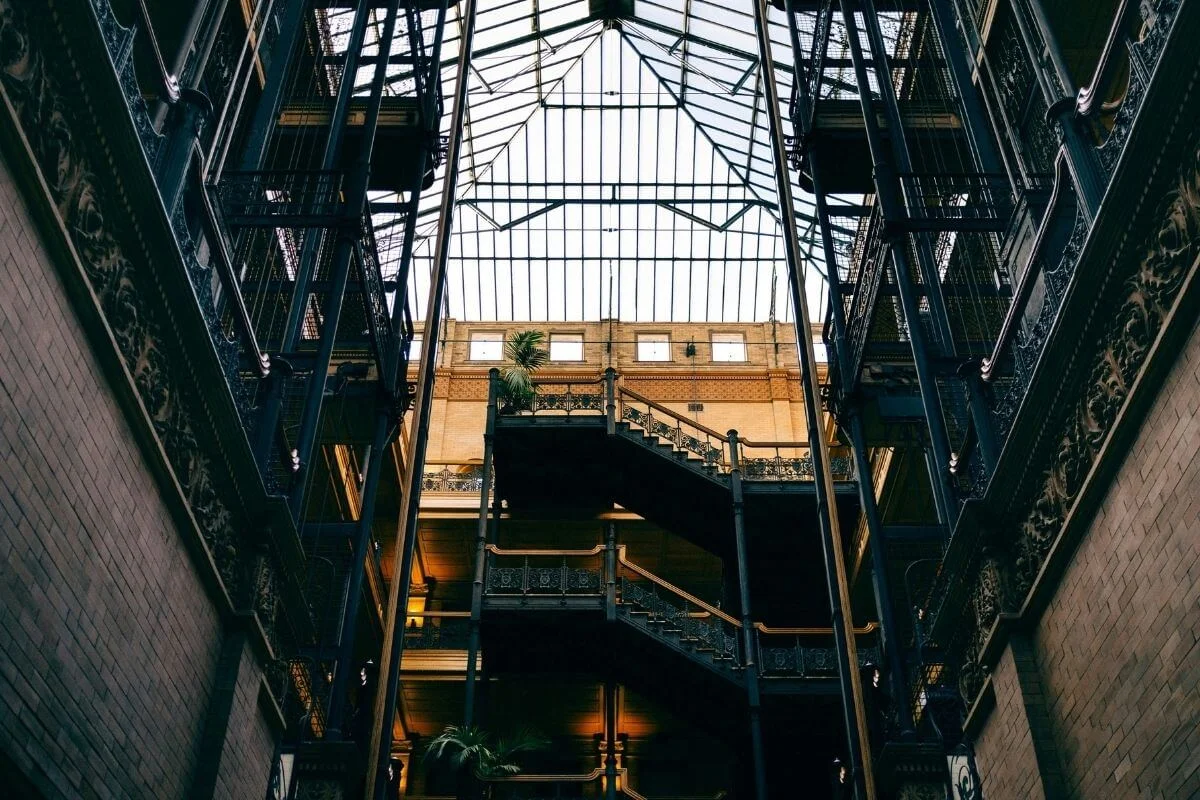
The Bradbury Building at 304 South Broadway was completed in 1893 and remains one of the most visually distinctive structures in the city. Its central atrium — wrought iron staircases, ornate cage elevators, glazed skylight roof — is the kind of space that draws film crews back repeatedly. Blade Runner used it as J.F. Sebastian’s apartment building interior. 500 Days of Summer filmed here. So did The Artist.
The ground floor is open to the public during business hours, giving visitors a clear view of the atrium from street level. Upper floors are not accessible. For anyone interested in Los Angeles architecture beyond the Bradbury, the surrounding Broadway corridor contains some of the most intact historic theater facades in the country.
The Millennium Biltmore Hotel
The Millennium Biltmore Hotel at 506 South Grand Avenue opened in 1923 and has appeared in over 300 productions in the century since. Its grand lobby, Rendezvous Court lounge, and ornate plaza spaces have stood in for locations ranging from a Washington D.C. country club to a haunted New York hotel.
In Ghostbusters, the Biltmore served as the Sedgewick Hotel — the location of the team’s first ghost capture and Slimer’s first appearance on screen. Beverly Hills Cop filmed here. The building’s exterior was used in Chinatown as the front of The Brown Derby restaurant. Pretty in Pink filmed Molly Ringwald’s prom scene in the Crystal Ballroom.
The Biltmore is a working hotel. The lobby and public areas are accessible to visitors without a reservation.
Santa Monica and Venice Filming Locations in Los Angeles
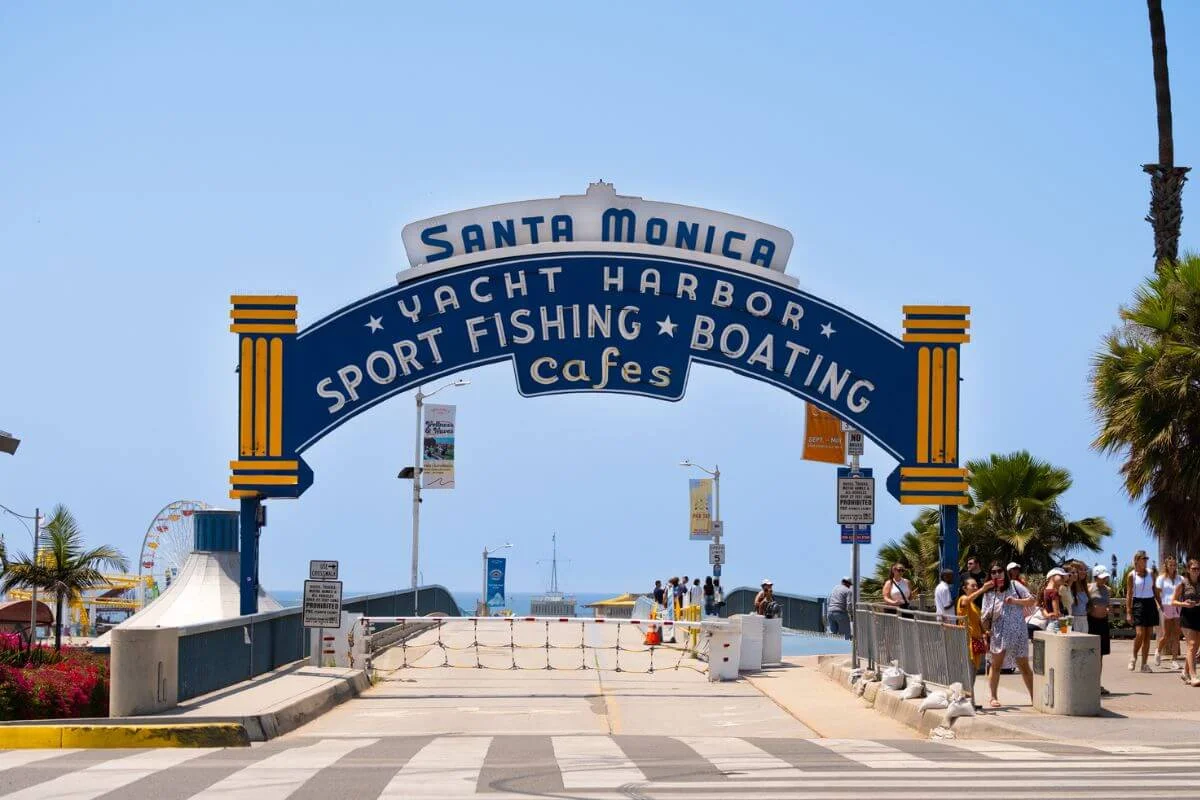
The coastline west of Hollywood has produced its own set of filming locations, several of which are among the most recognizable in the L.A. area.
Santa Monica Pier
The world-famous Santa Monica Pier is where Forrest Gump ends his run across America, stopping at the edge of the Pacific Ocean before turning around and heading home. The shot is so well known that the pier’s position at the end of the continent has become part of its identity as a filming locale.
The pier is also home to Pacific Park, an amusement park with a Ferris wheel and rides that have appeared across film and television productions set on the California coast. The pier sits at the historic end of Route 66, which adds another layer to its cultural footprint. Walking onto the pier is free. Ride tickets are purchased separately. Our Half Day Best of LA Tour stops here, and the Hollywood, Beverly Hills, & Celebrity Homes Open Air Tour departs from Santa Monica daily.
Venice High School
Venice High School at 13000 Venice Boulevard served as the exterior of Rydell High School in Grease (1978) — the facade seen throughout the film and during the Summer Nights number. The school has appeared in several other productions since, including A Nightmare on Elm Street 4, and has been used for film shoots and music videos across multiple decades.
It is an active school. The exterior is viewable from Venice Boulevard and the surrounding public sidewalks. Interior access is not open to visitors.
Venice Beach Boardwalk
Venice Beach is one of the most frequently used filming locations in Los Angeles, with a boardwalk, canals, and beachfront that have appeared in a wide range of movies and TV shows. The basketball courts at Venice Beach — used in White Men Can’t Jump — remain one of the most filmed outdoor sports locations in the country. The area’s mix of street performers, murals, and Pacific Ocean backdrop has made it a go-to for music videos and TV series looking for a setting that reads immediately as Southern California.
The boardwalk is free and open daily.
See Hollywood’s Filming Locations on a Guided Tour
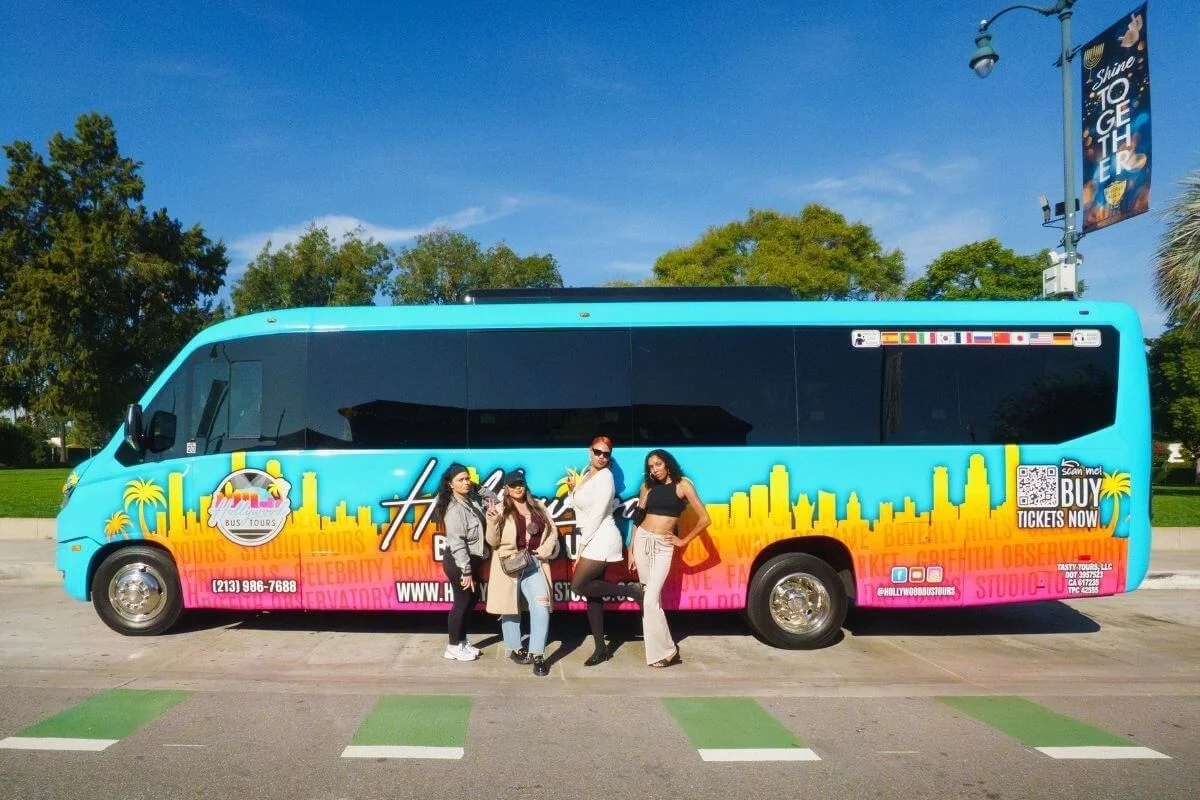
Several of the locations in this guide — Mulholland Drive, the Sunset Strip, Beverly Hills, and the Hollywood Hills — sit within a single 2.5-hour route through the heart of Los Angeles.
Our Hollywood, Beverly Hills, & Celebrity Homes Open Air Tour covers that corridor daily in an open-air van with a driver-guide who knows the filming history of every neighborhood you move through. The same streets that have appeared in several films across decades of production look different when someone who knows the area is telling you what you’re looking at.
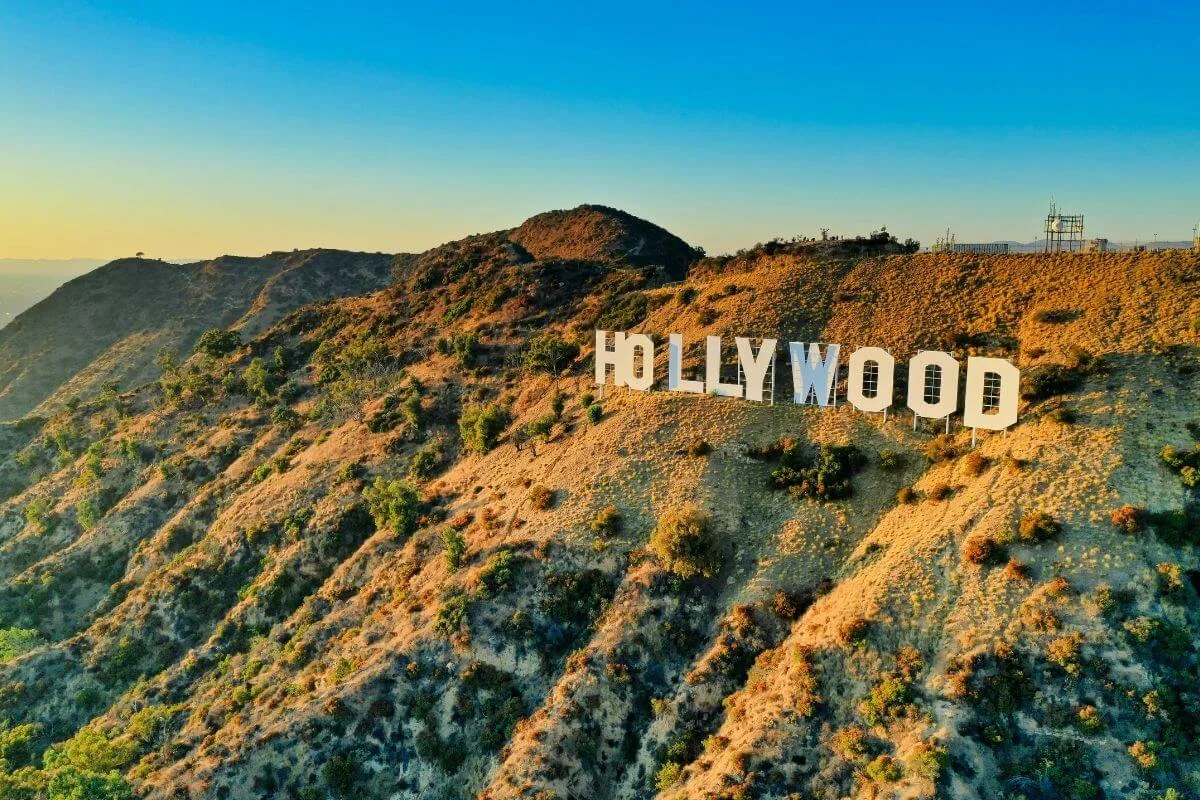
For a longer day that adds Griffith Observatory — one of the most popular filming locations in the city — the Half Day Best of LA Tour covers a wider range of locations across 5.5 hours, with stops at the Observatory for iconic Hollywood Sign views, the Santa Monica Pier, and the Farmers Market and The Grove. Both tours depart daily from Hollywood and Santa Monica.
Browse our tours and book your spot.
Was Chinatown filmed in Los Angeles?
Yes. Roman Polanski’s 1974 film shot extensively around the Los Angeles area. The exterior of the Millennium Biltmore Hotel’s limousine ramp was used as the front of The Brown Derby restaurant in one of the film’s key scenes — the same building covered earlier in this guide.
Where was 500 Days of Summer filmed in Los Angeles?
The Bradbury Building in Downtown Los Angeles is the most recognizable location from the film. The building’s ornate atrium appears in the scene where Tom visits Summer’s apartment, and its distinctive ironwork and glass ceiling are immediately recognizable on screen.
What is the connection between Century City and 20th Century Fox?
Century City, the commercial district west of Beverly Hills, was developed in the early 1960s on land that was the original 20th Century Fox studio backlot. The studio sold the property to fund its productions, and the office towers and shopping center that replaced it sit on land that was once an active film backlot.
Is Los Angeles still an active film production city?
It is. Film shoots happen across the city on any given day, and it is not unusual to come across active production on Hollywood Boulevard, in residential neighborhoods, or along the Sunset Strip. The city issues thousands of filming permits annually across a wide range of locations.