
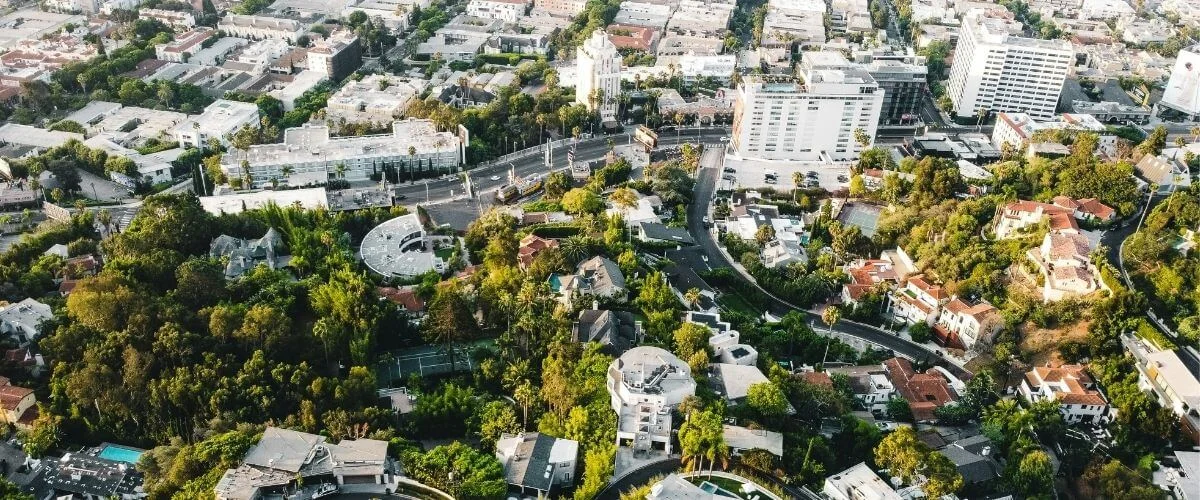
West Hollywood is a compact, walkable city tucked between Beverly Hills and Hollywood, packed into just 1.9 square miles and nicknamed “The Creative City.” In WeHo you’ll find the galleries and showrooms of the Design District, the music history of the Sunset Strip, celebrity-loved restaurants, and some of LA’s best rooftops, all close enough together to explore on foot.
WeHo is best known for the Sunset Strip, and the clubs still deliver, but there’s far more folded into these 1.9 square miles than that reputation suggests. Behind the big-name nightlife there’s a full design and gallery scene, celebrity-loved cafes, and streets calm enough to wander on foot, which is rare for LA.
We put this guide together the way we’d walk a friend through the neighborhood, the Design District, the Sunset Strip, the hidden gems locals love, and the rooftops and spas worth a stop. Stick around to the end for the easiest way to see it all without a car.
Our top-rated Hollywood, Beverly Hills & Celebrity Homes Open Air Tour rolls through WeHo and down the Sunset Strip, past celebrity homes, Beverly Hills, and Rodeo Drive, with Hollywood Sign views along the way.
Browse our tours and find the right fit for your Hollywood trip.
Where Is West Hollywood?
West Hollywood, or WeHo, is its own city, not a neighborhood of Los Angeles, even though LA wraps around it on three sides. It became an incorporated city in 1984, and at 1.9 square miles it’s one of the smallest and most densely built cities in the county, with a population near 36,000 that swells on weekends when the nightlife fills up.
WeHo at a Glance
- Size: 1.9 square miles, small enough to cross on foot
- Walkability: ranked the most walkable city in California by Walk Score, with a score of 91 out of 100, well ahead of Los Angeles
- Nickname: “The Creative City,” earned through its design showrooms, galleries, and music history
- Known for: the Sunset Strip, the Design District, celebrity dining, rooftop pools, and a long history as a center of LGBTQ+ life
- Location: wedged between Beverly Hills and Hollywood, a straight shot from the beach down Santa Monica Boulevard
That walkability is the thing most visitors underestimate. You can park once, or skip the car altogether, and reach the Strip, the Design District, and Santa Monica Boulevard on foot in a single afternoon.
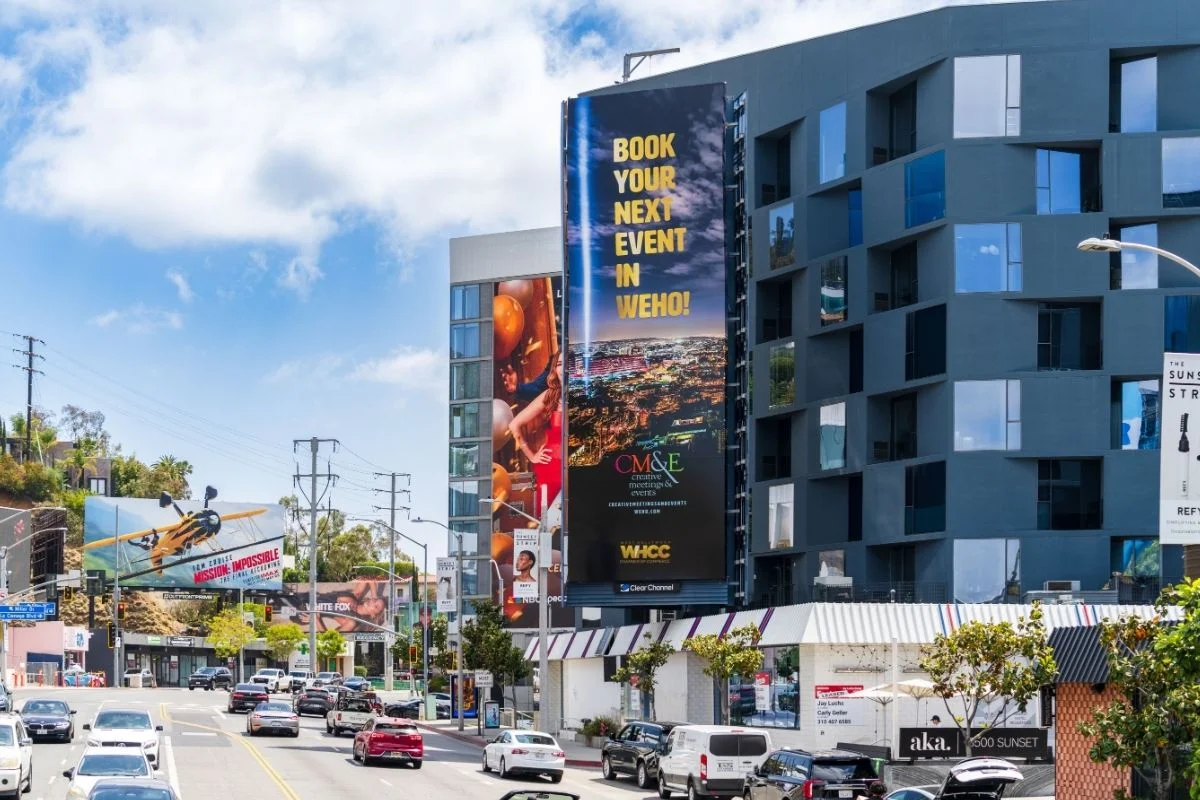
The West Hollywood Design District
The Design District covers the southwest corner of WeHo, roughly between Melrose Avenue and Beverly Boulevard, framed by Doheny Drive to the west and La Cienega Boulevard to the east. More than 200 showrooms, galleries, and boutiques sit within a few walkable blocks, and it’s where the “Creative City” nickname comes from.
The Pacific Design Center
The Pacific Design Center is the anchor, and you can’t miss it. Designed by architect César Pelli and built in the mid-1970s, it’s a complex of more than a million square feet across three buildings clad in bright blue, green, and red glass. The blue one is so large next to its neighbors that locals have called it the “Blue Whale” for decades.
- Most of the 100-plus showrooms sell to interior designers and the trade, but the complex, courtyards, and rotating design exhibitions are open to walk through
- It also hosts design exhibitions, screenings, and industry events through the year, many of them open to the public
Galleries, Boutiques, and Street Art
Beyond the PDC, the district runs on blue-chip galleries, design showrooms, and high-end boutiques, with art tucked into storefronts along Beverly Boulevard and Melrose Avenue. Robertson Boulevard adds the celebrity-shopping stretch, the kind of block where you might spot a familiar face ducking into a store between appointments.
The street murals scattered through the area have made it one of the more photographed corners of WeHo. If galleries and photo spots are why you’re here, our roundups of LA’s best galleries and photography museums and the best places to take pictures in LA are worth a look before you go.
Santa Monica Boulevard and the Rainbow District
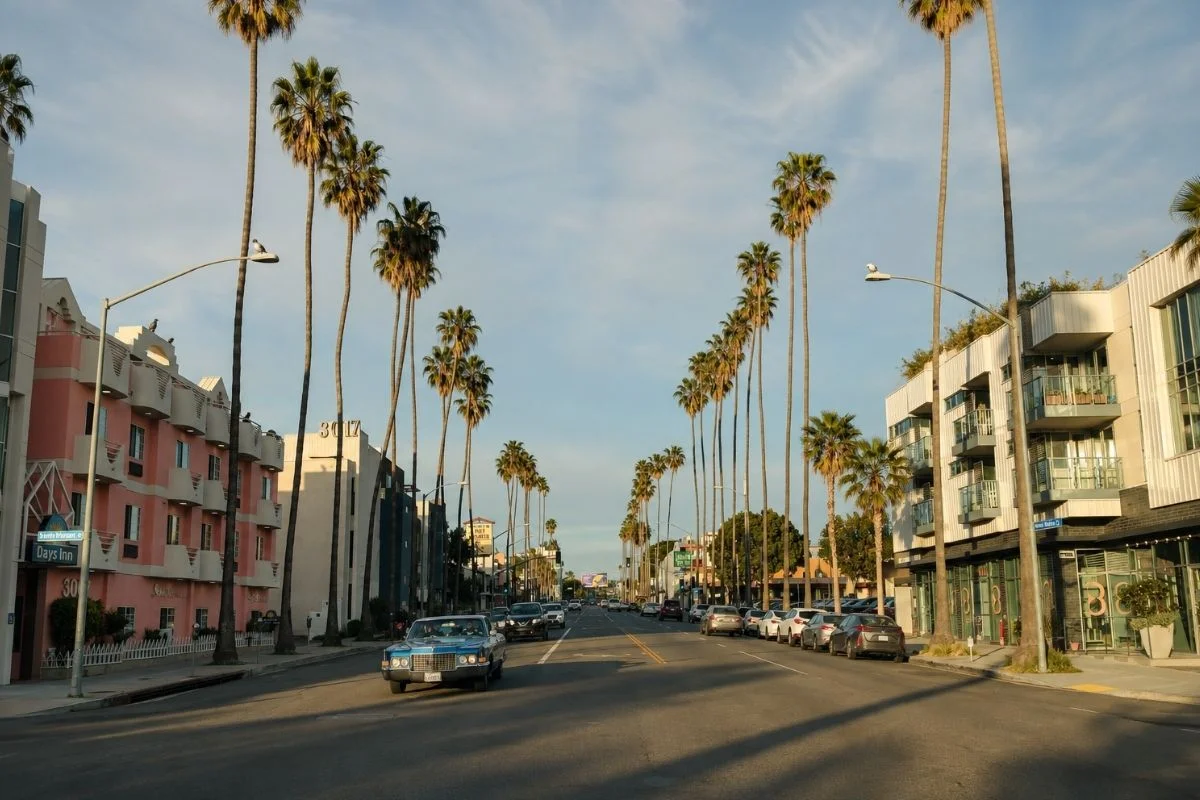
Santa Monica Boulevard runs through the heart of WeHo, and it carries more history than any other street in the city. It follows an old streetcar line from the 1890s, and in the 1930s it was designated part of historic Route 66, which you’ll still see nodded to around town.
Today the boulevard is the center of West Hollywood’s LGBTQ+ community, one of the most significant in the country. The stretch known as the Rainbow District is lined with bars, restaurants, and shops, and it hosts the city’s annual Pride celebration and the world-famous Halloween Carnaval, a street party that draws hundreds of thousands.
The boulevard also holds quieter landmarks. The West Hollywood Memorial Walk sets bronze plaques into the sidewalk, each engraved with the name of someone lost to HIV/AIDS, a reminder of the community’s history alongside its celebration.
The Legendary Sunset Strip
The Sunset Strip is the stretch of Sunset Boulevard that made WeHo famous, and it’s still where the music history lives.
For the full history, a venue-by-venue rundown, and where to go tonight, read our ultimate guide to the Sunset Strip.
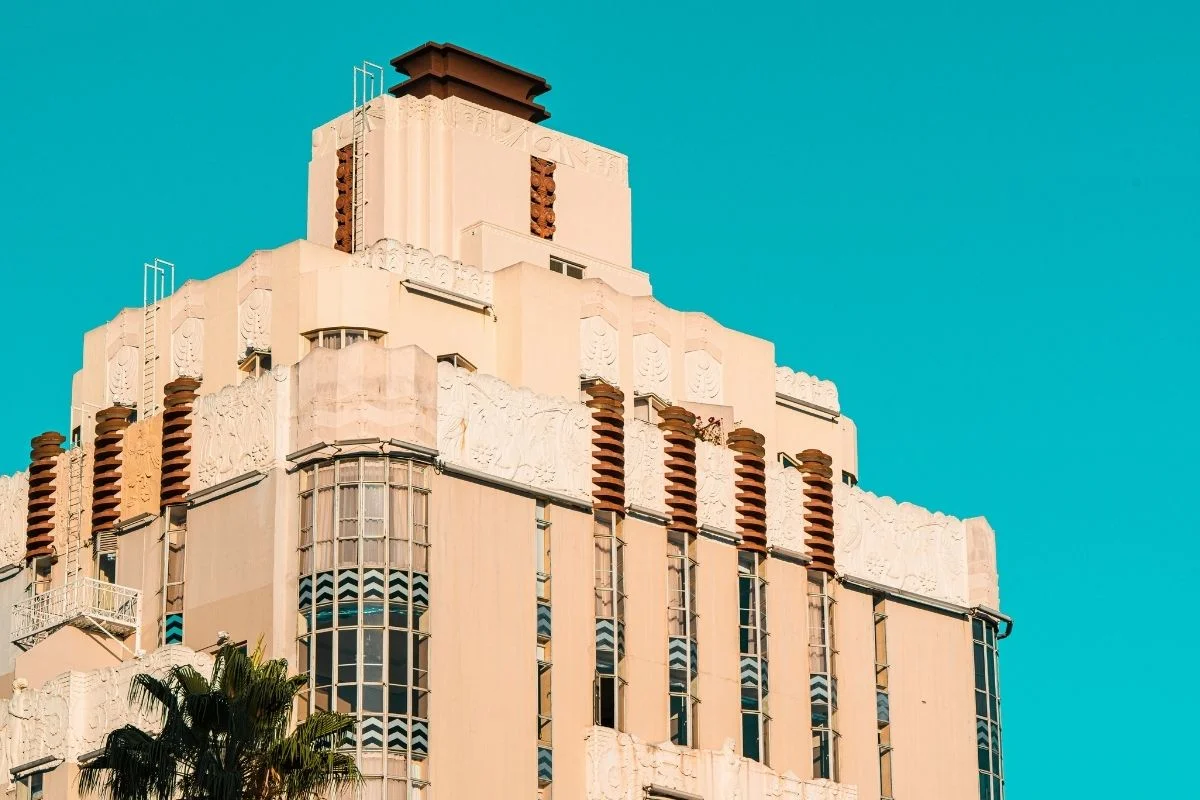
Music History on the Strip
A few names have anchored this stretch for generations. The Whisky a Go Go opened in 1964 and still books rock bands under its marquee most nights. The Roxy opened in 1973 and remains an intimate live room, and just off the Strip on Santa Monica Boulevard, The Troubadour is where Elton John’s 1970 shows became his American breakthrough. Add The Comedy Store and you have four rooms that shaped LA’s music and comedy scene.
Where to Eat in West Hollywood
WeHo dining runs from Old Hollywood institutions to plant-based patios, and a lot of it comes with a side of people-watching.
- Old Hollywood: The Formosa Cafe, a red-trolley-car restaurant and bar that fed Hollywood stars for generations, was restored and reopened by the 1933 Group and still serves under its glowing sign.
- Celebrity favorites: Spots like Craig’s and the old-school Italian Dan Tana’s draw enough of a crowd that paparazzi sometimes wait outside. For more of these, see our guide to celebrity-spotting restaurants in LA.
- Plant-based: A half-mile of Melrose Avenue has earned the nickname “plant-based alley,” anchored by Gracias Madre, a vegan Mexican spot with a packed, olive-tree patio.
- Coffee: The Design District and Melrose have a real cafe culture, with longtime favorites like Urth Caffé good for a break between galleries.
Landmarks and Hidden Gems
A few blocks off the Strip, the noise drops and WeHo turns residential, shaded streets, low-key cafes, and the landmarks most visitors walk right past.
- Schindler House (MAK Center for Art and Architecture): Built in 1922 by architect Rudolph Schindler on Kings Road, this is one of the earliest modern homes in the country, designed around indoor-outdoor living long before it caught on. It’s open for tours and exhibitions, so check current days and hours before you go. Our self-guided LA architecture tour has more in this vein.
- Book Soup: An independent bookstore on Sunset since 1975, with floor-to-ceiling shelves, author readings, and a long history of celebrity regulars. It’s one of the last great indie bookstores on the Westside.
- West Hollywood Park and Library: The renovated park near the Design District holds a striking modern public library, a pool, and green space, and every Oscar night it transforms into the venue for the star-studded Elton John AIDS Foundation viewing party.
Spas, Rooftops, and Wellness
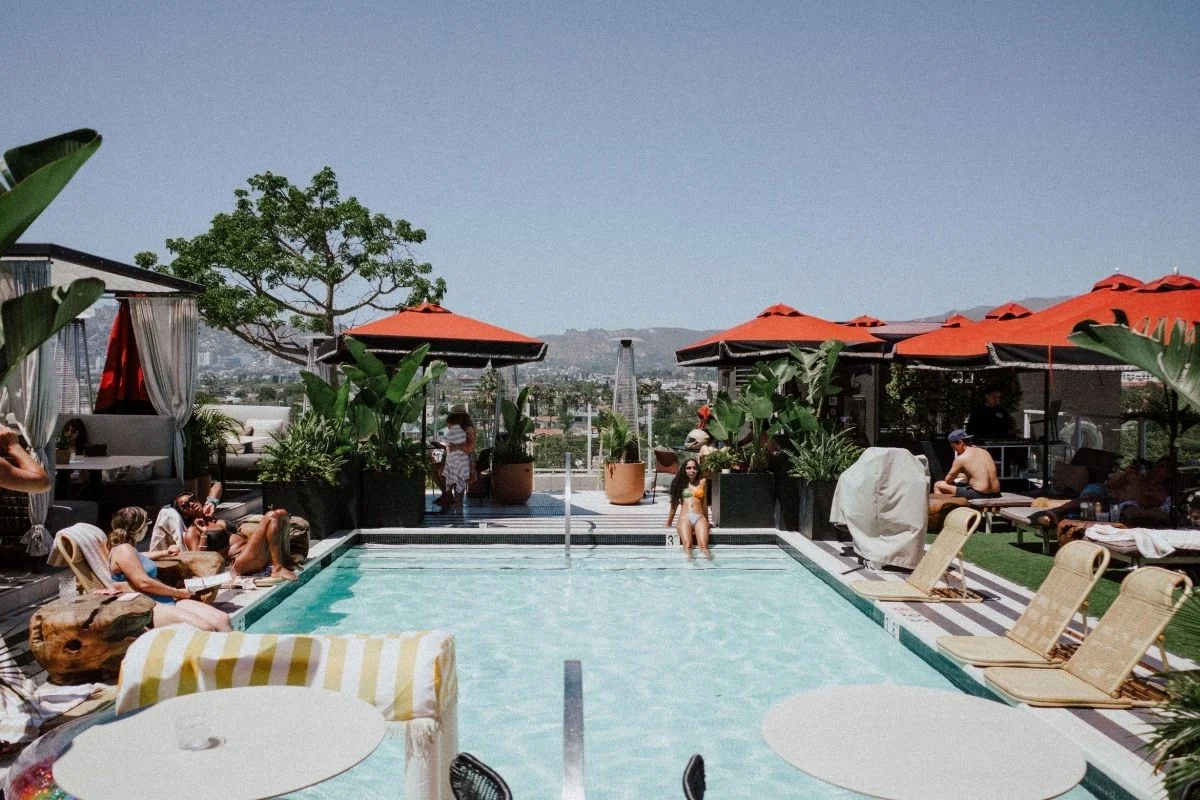
For a city this small, WeHo has a deep bench of rooftops and wellness spots, and a lot of them are open to visitors, not just hotel guests.
Rooftop Pools and Views
- Skybar at the Mondrian Los Angeles, a rooftop pool and bar perched above Sunset Boulevard
- Kimpton La Peer, whose rooftop doubles as a weekend social scene
- Petit Ermitage, a boutique hotel with a saltwater rooftop pool that’s also an Audubon-certified bird and butterfly sanctuary, one of only a handful in LA
Wellness, Spas, and Studios
Remedy Place, on Sunset, calls itself the world’s first social wellness club. Founded in 2019, its flagship WeHo location offers ice baths, infrared saunas, hyperbaric oxygen, and IV therapy, and you don’t need to be a member to book. Beyond it, the city is thick with full-service spas and boutique fitness studios, part of why WeHo reads as much like a wellness capital as a nightlife one.
Where to Stay in West Hollywood
Staying in WeHo puts you walking distance from the Strip and central for the rest of the city. A few that capture the different sides of the neighborhood:
- Sunset Marquis: A longtime music-industry favorite set on three acres of gardens, with a hidden recording studio that has hosted major artists and villas built for privacy
- Petit Ermitage: An 80-suite boutique hideaway just off the Strip, no two rooms alike, holder of a Michelin Key and that bird-sanctuary rooftop pool
- Andaz West Hollywood: The Sunset Boulevard tower once nicknamed the “Riot House” for the rock stars who wrecked it in the 1970s, now a modern hotel with skyline views
See West Hollywood the Easy Way
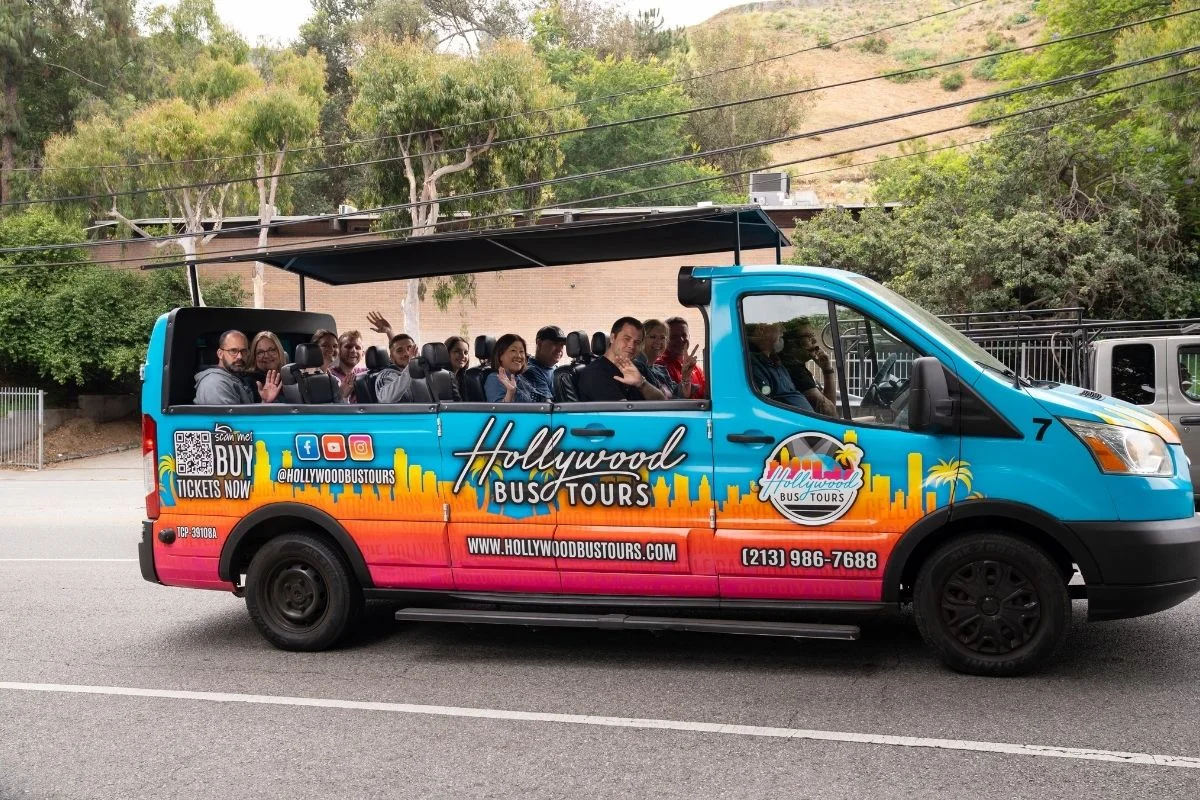
West Hollywood is best on foot, and the rest of LA is best with someone else driving. WeHo is walkable, but the icons beyond it are spread across the city and buried in traffic, which is where we come in.
Our Hollywood, Beverly Hills & Celebrity Homes Open Air Tour runs straight through WeHo and down the Sunset Strip, then on to celebrity neighborhoods, Beverly Hills, and Rodeo Drive, with Hollywood Sign views from Mulholland Drive. It’s about two hours from the Walk of Fame, with more than 20,000 five-star reviews behind it.
Browse our tours and find the one that fits the trip.
What’s Nearby
- Runyon Canyon: A quick hike with skyline and Hollywood Sign views, minutes from WeHo. See our guide to the best hikes in LA
- Griffith Observatory: Free, iconic, and one of the best sunset spots in the city. More in our Griffith Observatory guide
- Beverly Hills: Right next door for Rodeo Drive and, after the sun goes down, our things to do in Beverly Hills at night
- Hollywood Bowl: The legendary outdoor amphitheater a short drive east, covered in our Hollywood Bowl guide
If you’re still shaping the wider trip, our first-time LA itinerary guide and our guide to getting around LA without a car cover how it all connects.
West Hollywood FAQ
Is West Hollywood the same as Hollywood?
No. West Hollywood is its own incorporated city, established in 1984, while Hollywood is a district of the City of Los Angeles just to the east. They border each other along the Sunset Strip, which is one reason visitors mix them up.
Is West Hollywood walkable?
Yes. WeHo is ranked the most walkable city in California by Walk Score, with a score of 91 out of 100. Its whole 1.9 square miles can be crossed on foot, though the wider LA area around it is spread out and better seen with a car or a tour.
What is West Hollywood known for?
West Hollywood is known for the Sunset Strip and its nightlife, the Design District and the Pacific Design Center, its rooftop pools and spas, celebrity-loved restaurants, and a long history as one of the country’s most important centers of LGBTQ+ life.
Where is the West Hollywood Design District?
The Design District sits in the southwest corner of West Hollywood, roughly between Melrose Avenue and Beverly Boulevard. It’s anchored by the Pacific Design Center and holds more than 200 galleries, showrooms, and boutiques.
Does Hollywood Bus Tours drive through West Hollywood?
Yes. Our Hollywood, Beverly Hills & Celebrity Homes Open Air Tour runs through West Hollywood and down the Sunset Strip on its way past celebrity neighborhoods, Beverly Hills, and Rodeo Drive. It’s a two-hour open-air tour departing from the Hollywood Walk of Fame.
What’s the best way to see West Hollywood without a car?
West Hollywood itself is easy to explore on foot thanks to its walkability. To connect it with the rest of LA’s highlights without driving or parking, a guided open-air tour covers the Strip, celebrity neighborhoods, Beverly Hills, and Hollywood Sign views in one loop.