
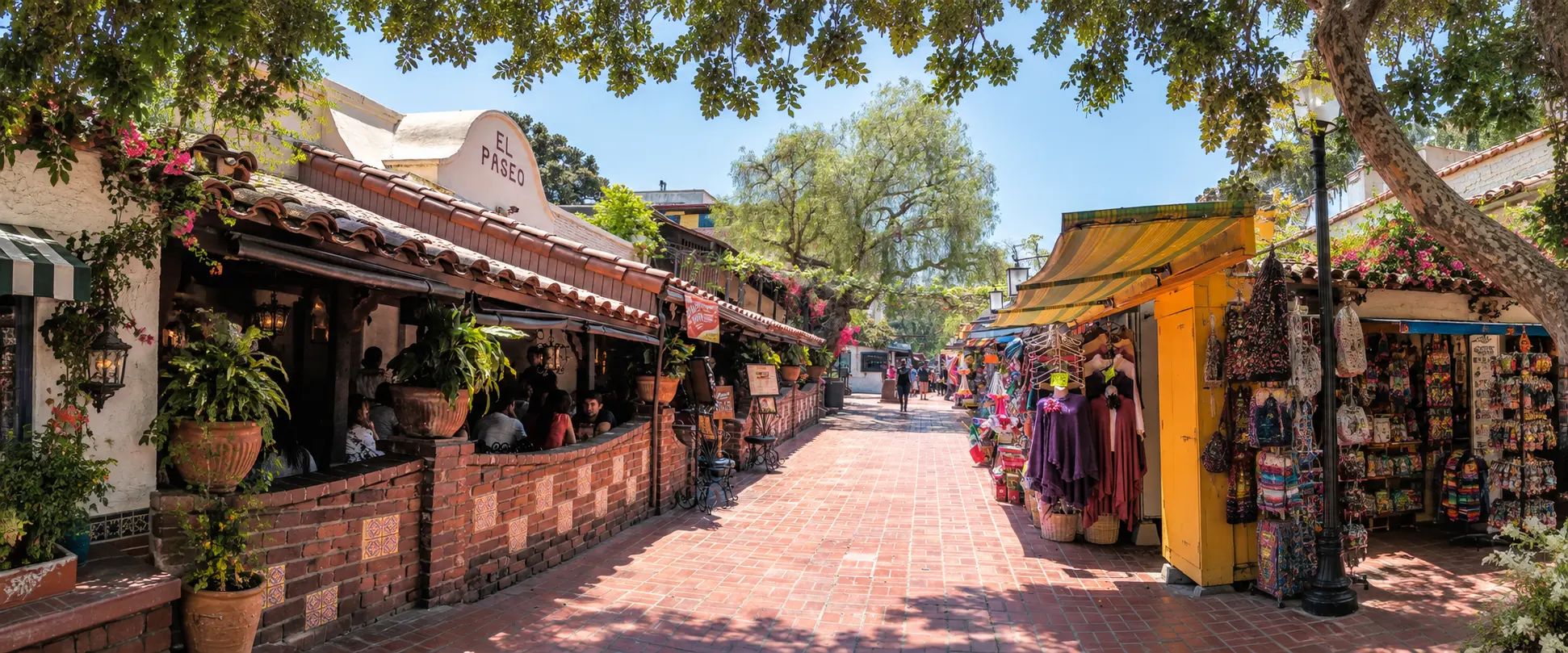
The best things to do on Olvera Street start with the Avila Adobe, the oldest standing house in Los Angeles. El Pueblo de Los Angeles around it holds free museums, a historic plaza, and a brick-lined Mexican marketplace, and each fall the street hosts a free nine-day Día de los Muertos festival.
El Pueblo is where Los Angeles began. In 1781, settlers of Native American, African, and European heritage crossed more than a thousand miles of desert from what is now northern Mexico and planted the small farming town that LA grew from. Today, Olvera Street runs through the middle of it, a brick-lined lane of painted market stalls, taquito counters, and the city’s oldest buildings.
Our guides tell LA’s story every day on tours through Hollywood, Beverly Hills, and Santa Monica, and that story starts here. You can walk the whole founding chapter in a few hours, with a free museum or two and lunch at the marketplace along the way.
Olvera Street makes an easy half day on its own. The rest of LA’s highlights are spread across the city, and our Half Day Best of LA Tour covers them with a local guide behind the wheel. We cover stops like Beverly Hills and Rodeo Drive, The Farmers Market and The Grove, and Griffith Observatory for Hollywood Sign views.
See all of our LA tours and pick the one that fits your trip.
Table of Contents
- Olvera Street, the Birthplace of Los Angeles
- Día de los Muertos on Olvera Street
- Things to Do on Olvera Street
- Free Museums in El Pueblo de Los Angeles
- The Los Angeles Plaza and La Placita Church
- Where to Eat on Olvera Street
- Getting to Olvera Street, Parking, and Hours
- How Olvera Street Fits a First Trip to LA
- FAQ
Olvera Street, the Birthplace of Los Angeles
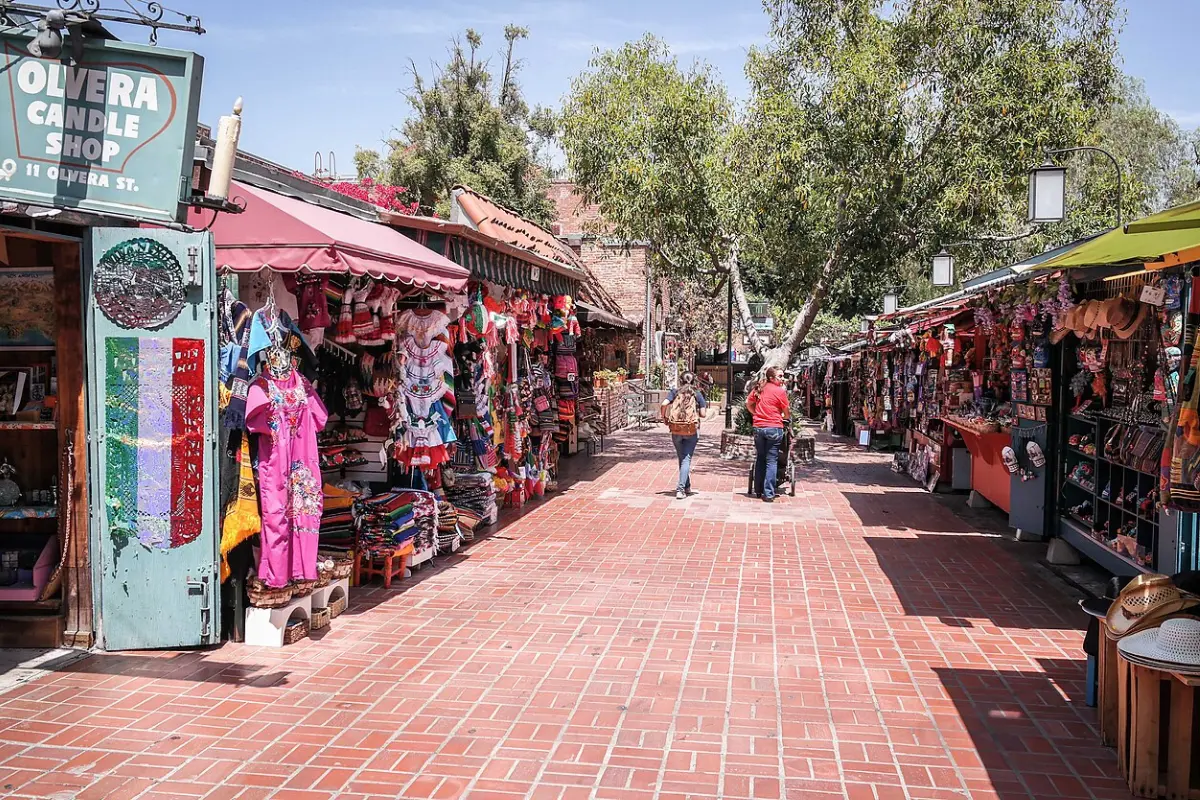
The oldest part of the city is protected as El Pueblo de Los Angeles Historical Monument, a 44-acre district in Downtown LA. Olvera Street is the pedestrian lane at its center, and the plaza and historic buildings around it tell the rest of the city’s early story.
The 1781 Founding and the 44 Settlers
In September 1781, 44 settlers founded a farming community near the site of today’s monument, according to the official history from El Pueblo de Los Angeles. The town’s Spanish name honored Our Lady, the Queen of the Angels, and it stayed small for years, with just 315 residents by 1800.
Like many Spanish towns, Los Angeles was laid out around a plaza, and El Pueblo stayed the heart of the city through Spanish, Mexican, and early American rule. By the late 1800s the center of town had moved on, and the neighborhood became home to LA’s original Chinatown and Little Italy. Our list of interesting facts about Los Angeles covers more of that early history, including the river that made the first settlement possible.
The 1930 Mexican Marketplace
The lane started out as Wine Street and was renamed in 1877 for Agustín Olvera, the first judge of Los Angeles County. By the 1920s the area had declined, and the city condemned the Avila Adobe, built in 1818 by former alcalde Francisco José Avila and the oldest house in Los Angeles.
A preservationist named Christine Sterling saw the condemnation notice and started a public campaign to save the adobe, with support from Los Angeles Times publisher Harry Chandler. The campaign grew into a plan for a Mexican marketplace where visitors could learn about the city’s Spanish and Mexican heritage, and Sterling brought in artisans and craftspeople to fill it.
Olvera Street opened on Easter Sunday, 1930, and Union Station was later built across Alameda Street, on land that had been part of that first Chinatown. Some of the families selling on Olvera Street today have been there for four generations.
Día de los Muertos on Olvera Street
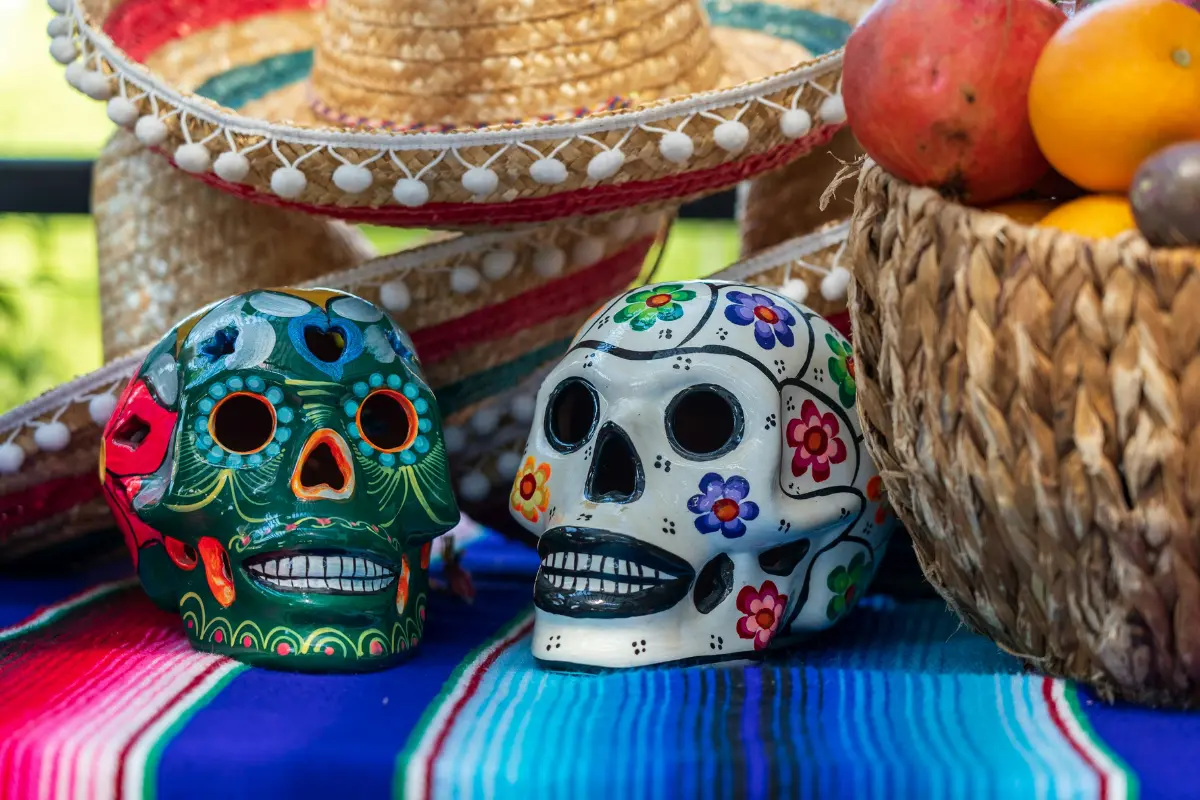
Día de los Muertos, the Day of the Dead, brings a free nine-day festival to Olvera Street every year from October 25 through November 2. The Olvera Street Merchants Association Foundation has hosted it for decades, and the celebration draws on Aztec, Mayan, and Catholic traditions for honoring the dead.
2026 Festival Dates
The 2026 festival runs from Sunday, October 25 through Monday, November 2. Daytime entertainment is scheduled for October 25, October 31, and November 1, with an evening-only program on November 2, and the organizers are still finalizing the full performance schedule, so check the festival page before you go.
The Nightly Novenario Procession
Every night of the festival, the Novenario procession moves along Olvera Street. Grupo Tartalejos, an Aztec group, leads it with incense and a ceremonial blessing, followed by Aztec dancers and “Living Muertos” dressed as skeletons. The procession ends at the Kiosko, the plaza’s bandstand, where the loved ones of a merchant family or community member are honored, and free sweet bread and drinks go to everyone there.
Teatro del Barrio also performs La Danza de la Muerte at 6 p.m. each night, a play about the holiday’s Indigenous roots and how the celebration changed over time.
The Community Altars
Las Ofrendas, the outdoor altar display, stays up for all nine days from 10 a.m. to 9 p.m., with community altars built to honor people who have died.
Las Posadas, Blessing of the Animals, and Other Celebrations
The street keeps a full calendar of traditional celebrations through the year. The Blessing of the Animals, held here since 1930, takes place on Holy Saturday, the day before Easter. Las Posadas comes at Christmastime, and the merchants also mark Los Tres Reyes, Cinco de Mayo, and Mexican Independence Day with music and dancing.
Things to Do on Olvera Street
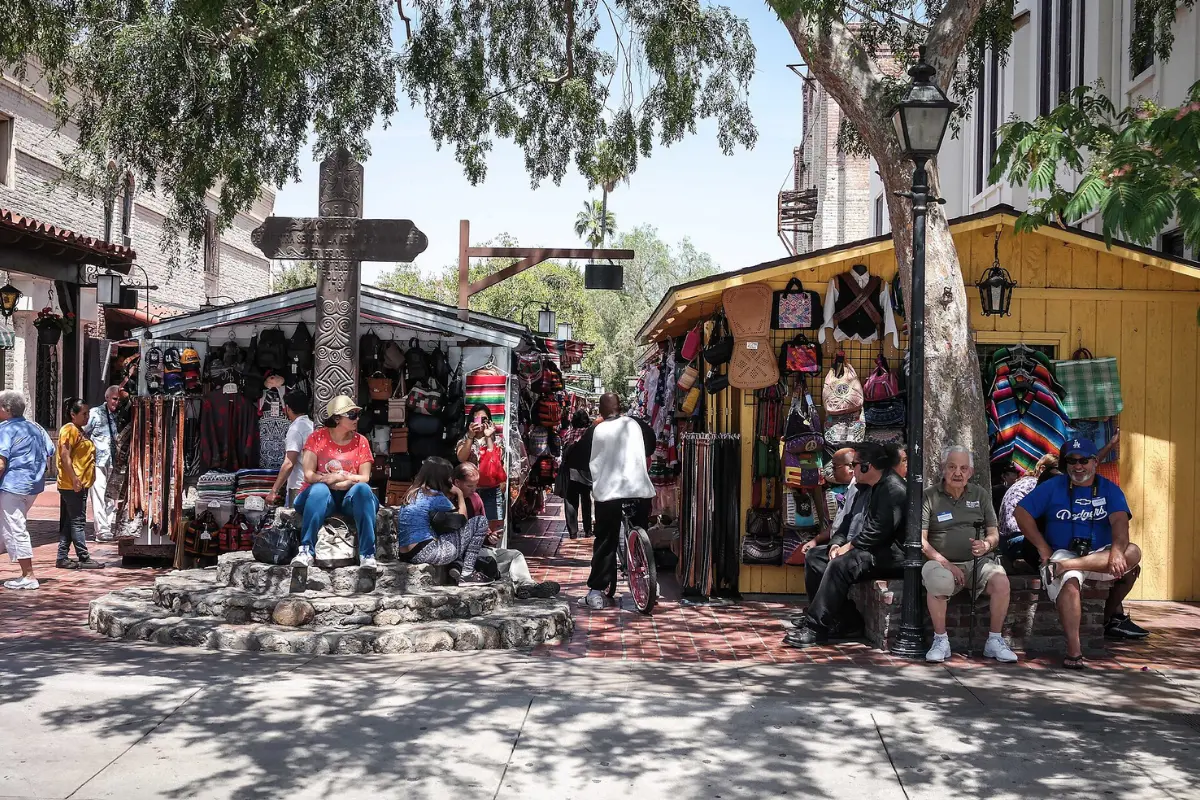
Olvera Street itself is one short pedestrian block, and the City of Los Angeles counts more than seventy food, retail, and specialty businesses there. Several of the city’s most historic buildings stand on the same street.
Walk the Olvera Street Marketplace
The stalls down the center of the lane sell pottery, small guitars, ponchos, sombreros, blankets, and Día de los Muertos art, much of it made in Mexico. On weekends, El Pueblo often has live music and dancing in the plaza, so a Saturday or Sunday afternoon is the liveliest time to walk it.
Tour the Avila Adobe
About halfway down the street sits the Avila Adobe, the oldest house in Los Angeles still standing in its original location and California Historical Landmark No. 145. Its thick walls are adobe brick, a mix of clay, water, and straw, and the rooms are furnished the way they might have looked in the 1840s. Entry is free, and you walk through at your own pace.
See the América Tropical Mural
In 1932, Mexican muralist David Alfaro Siqueiros painted América Tropical on a second-story wall of the Italian Hall, a mural of about 80 by 18 feet above Olvera Street. The once-controversial piece was restored through a partnership between the City of Los Angeles and the Getty Conservation Institute, and it reopened in 2012 with a rooftop viewing platform.
Stop at the Sepulveda House
The Sepulveda House is a 22-room Eastlake Victorian built in 1887, and today it holds El Pueblo’s visitor center, the América Tropical Interpretive Center, and exhibits on daily life in 1890s Los Angeles.
Free Museums in El Pueblo de Los Angeles
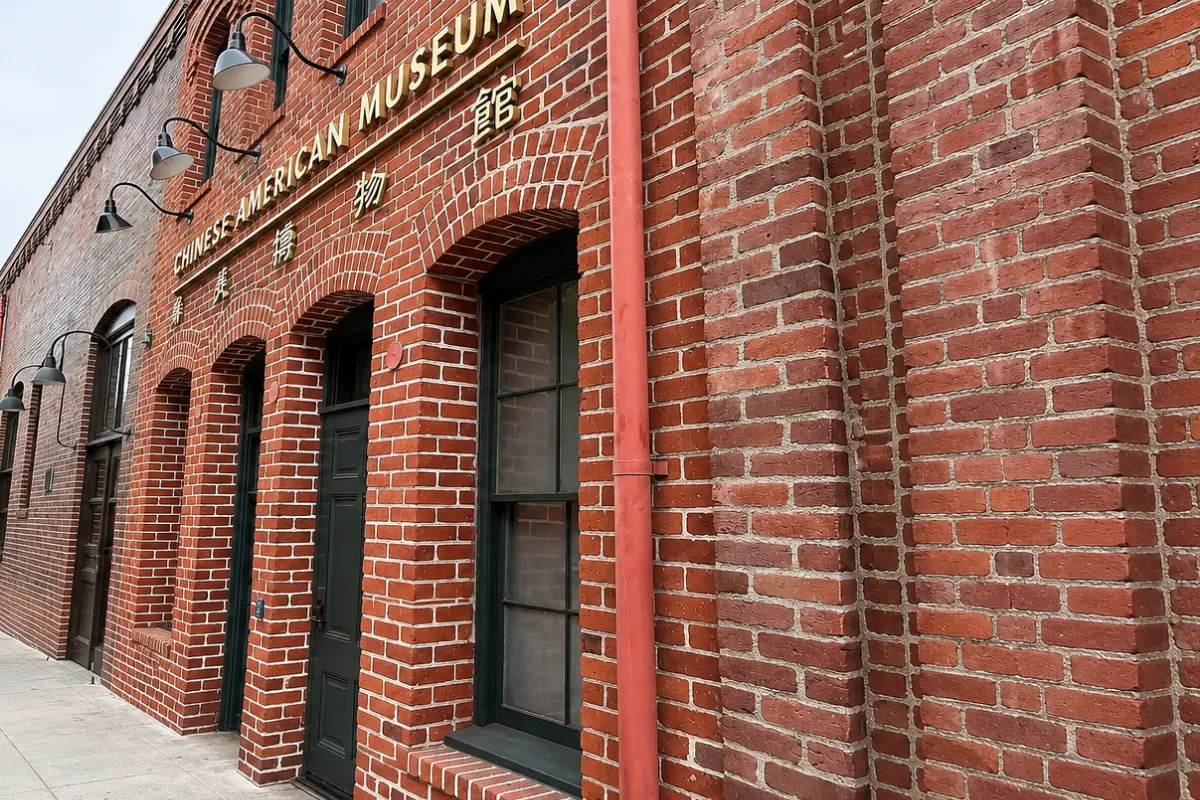
El Pueblo’s museums are small, close together, and mostly free, and the monument draws more than 2 million visitors a year. Plan around Mondays, when several of them are closed. For more no-cost ideas around the city, see our list of free things to do in Los Angeles.
Chinese American Museum
The Chinese American Museum sits in the red-brick Garnier Building, the last surviving structure from the city’s original Chinatown. Inside, exhibits trace Chinese American life in Los Angeles, including a recreation of the Sun Wing Wo general store and herb shop from the 1890s. It’s open Tuesday through Sunday from 10 a.m. to 3 p.m., with a small suggested admission.
Italian American Museum of Los Angeles
Housed in the same Italian Hall that holds the mural, built in 1908 and one of the oldest remaining structures from the city’s historic Little Italy, the Italian American Museum of Los Angeles covers Italian American history in LA with about 6,000 artifacts, photos, and documents. Admission is free.
The Old Plaza Firehouse
Built in 1884, the Old Plaza Firehouse is the oldest fire station in Los Angeles. It served as a firehouse until 1897, then cycled through other uses before becoming a museum of early firefighting equipment, with the original horse stalls still inside. Entry is free.
LA Plaza de Cultura y Artes
LA Plaza de Cultura y Artes, a Smithsonian affiliate, tells the story of Mexicans, Mexican Americans, and Latinos in Los Angeles, including a walk-through recreation of 1920s Main Street. Admission is free, and it’s open Wednesday through Sunday from noon to 5 p.m.
The Los Angeles Plaza and La Placita Church
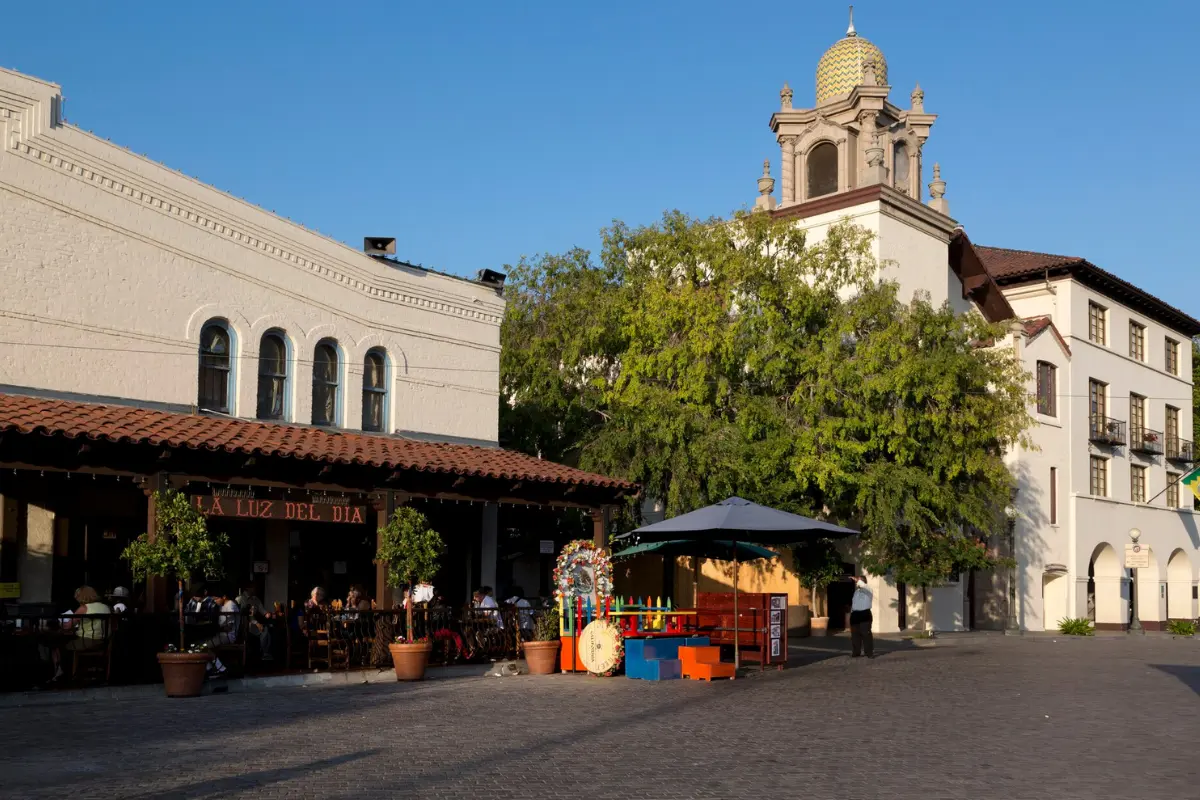
The plaza is where the town was organized from the start, and the oldest buildings outside Olvera Street sit around it.
Los Angeles Plaza Park
Los Angeles Plaza Park, also called Father Serra Park, sits at the heart of El Pueblo and hosts many of its festivals. Statues in the plaza honor King Carlos III of Spain, who ordered the town founded in 1780, Felipe de Neve, the Spanish governor who chose the site and laid out the town, and Father Junípero Serra, who founded the Alta California missions.
Look down near the fountain on Olvera Street and you’ll see a triple row of bricks set diagonally across the pavement. It marks the path of the Zanja Madre, the “mother ditch” that once carried water from the Los Angeles River to the pueblo.
Church of Our Lady Queen of the Angels
La Placita Church, formally Nuestra Señora Reina de los Ángeles, sits across the street from Olvera Street. Dedicated in 1822, it’s the oldest church in Los Angeles and the only building in El Pueblo still used for its original purpose.
The Pico House
Pío Pico, the last Mexican governor of Alta California, built the Pico House in 1869 and 1870 as the most lavish hotel in Southern California. The Italianate building faces the plaza and was the first three-story building in Los Angeles, though Pico lost it to foreclosure in 1880. Today it hosts events and exhibitions.
Free Walking Tours With Las Angelitas del Pueblo
Las Angelitas del Pueblo, El Pueblo’s volunteer docents, lead free walking tours of the monument on Thursdays, Fridays, and Saturdays at 10 a.m., 11 a.m., and noon. Tours start at the Las Angelitas office next to the Old Plaza Firehouse, and a docent fills in the stories behind each building along the way.
Where to Eat on Olvera Street
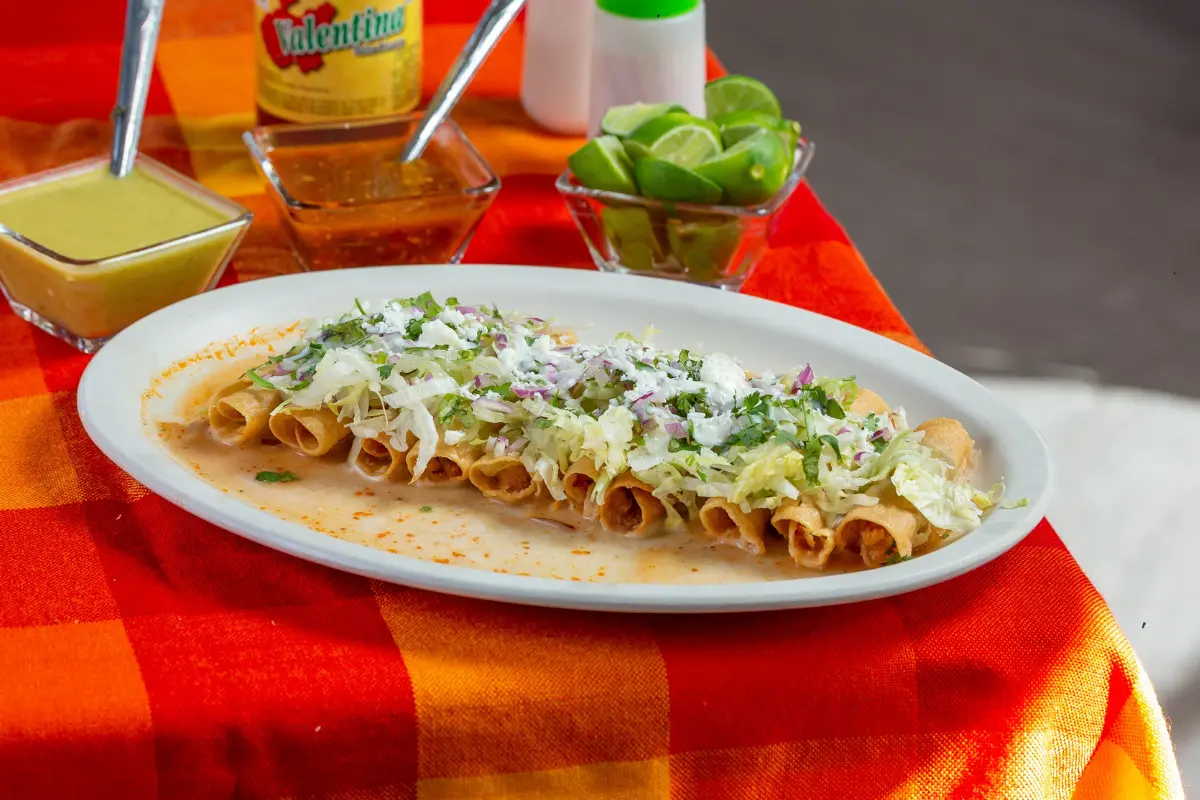
Food here runs from walk-up taquito windows to sit-down Mexican restaurants.
Taquitos, Churros, and Traditional Mexican Food
Cielito Lindo has served rolled beef taquitos under a thin, spicy avocado sauce on Olvera Street since 1934. It was founded by Aurora Guerrero, an immigrant from Zacatecas, Mexico, and her family still runs it four generations later (Orson Welles reportedly ate 43 taquitos in one sitting).
The stand reopened in June 2026 after a six-week closure, so check its current hours before you plan lunch around it. Elsewhere on the street, sit-down restaurants serve enchiladas, tamales, and chile rellenos, and carts sell churros and other Mexican sweets.
Grand Central Market and Other Nearby Food
For more choices, Grand Central Market has been Downtown’s food hall since 1917. Chinatown is about a block from Olvera Street, and Little Tokyo is about a mile from Union Station.
Getting to Olvera Street, Parking, and Hours
Olvera Street sits directly across from Union Station, which makes it easy to reach without a car. Our guide to getting around Los Angeles without a car covers the Metro basics.
Taking the Metro to Union Station
From Hollywood, the Metro B Line runs from Hollywood/Highland station straight to Union Station, the last stop, with no transfer. Union Station also connects to Metrolink, Amtrak, and the LAX FlyAway bus, and from the station you cross Alameda Street to reach El Pueblo.
Olvera Street Parking
El Pueblo has four pay public parking lots, including one off Main Street, along with metered street parking nearby and a paid garage at Union Station. Rates change, so check the posted prices when you pull in.
Hours and How Long to Spend
Olvera Street is open every day, and most shops and stalls trade from about 10 a.m. to 7 p.m. Museum hours are shorter, with several closing at 3 p.m. and on Mondays, and LA Plaza de Cultura y Artes also closes on Tuesdays. Two to three hours covers the street, the Avila Adobe, a museum or two, and lunch.
How Olvera Street Fits a First Trip to LA
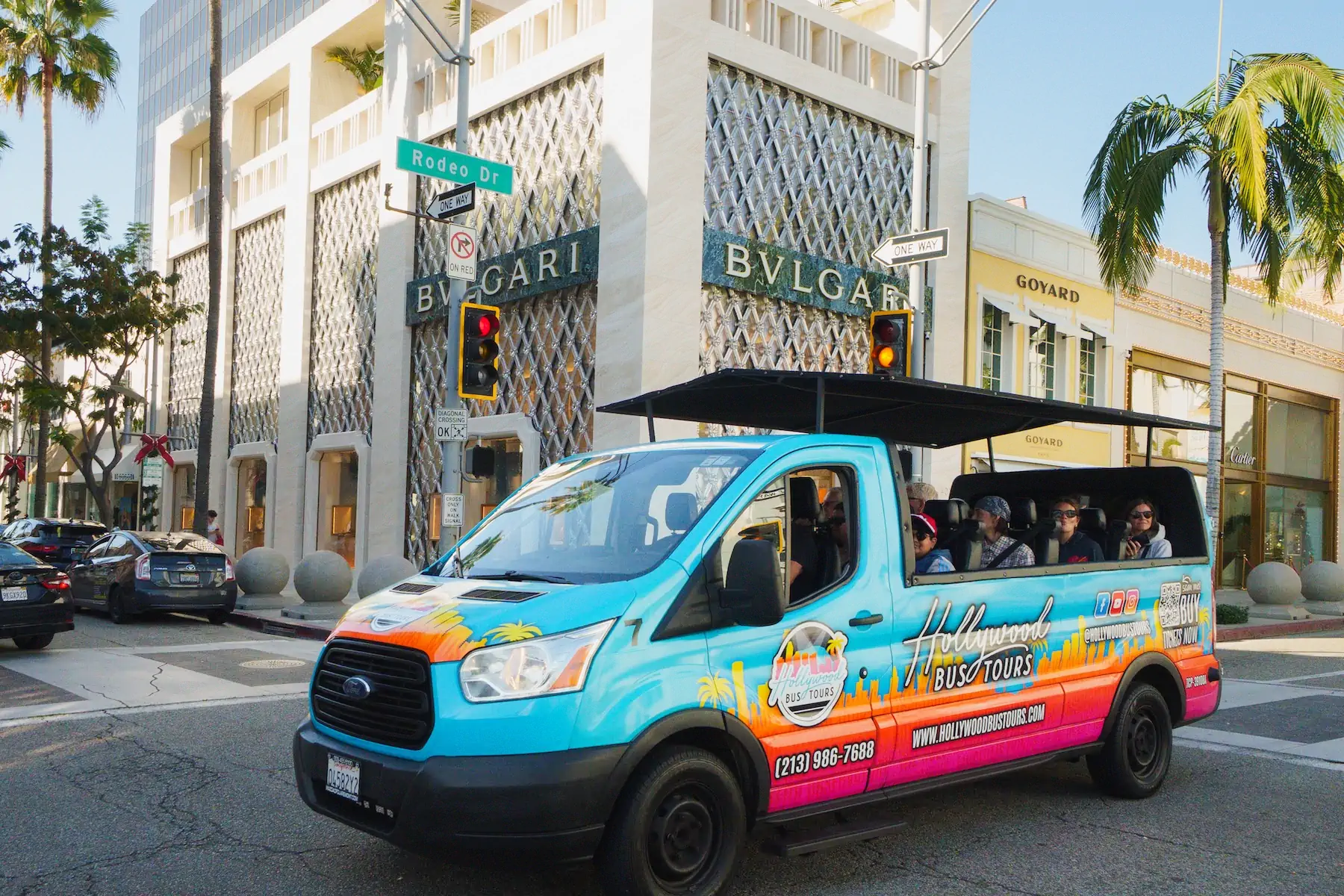
A full day in Downtown LA builds easily around Olvera Street, with Little Tokyo, Chinatown, Grand Central Market, and The Broad all nearby.
The rest of a first trip sits miles away, in Hollywood, Beverly Hills, the celebrity neighborhoods, and the coast, and that’s the part we drive every day. Our Hollywood, Beverly Hills, & Celebrity Homes Open Air Tour covers Hollywood and the celebrity neighborhoods, and the Half Day Best of LA Tour adds free time at four stops across the city. We’ve earned more than 20,000 five-star reviews doing it.
Both tours depart from Hollywood and Santa Monica.
FAQ
Is Olvera Street a good stop for first-time visitors?
Yes, if you want to see where Los Angeles began. Olvera Street sits in El Pueblo de Los Angeles, the city’s 1781 birthplace, and pairs the Avila Adobe, the oldest house in LA, with free museums and a Mexican marketplace. Plan two to three hours.
What is Olvera Street like today?
Olvera Street is a busy pedestrian marketplace of more than seventy food, retail, and specialty businesses, many run by the same families for generations. Foot traffic has been slow to recover since the COVID-19 pandemic, many buildings need costly repairs, and longtime businesses like Cielito Lindo have turned to community fundraising to stay open.
Is Olvera Street a tourist trap?
The marketplace has plenty of souvenir stalls, and it was created in 1930 as a romanticized Mexican market. The history around it is real, though, from the 1818 Avila Adobe to the 1822 La Placita Church, and food stands like Cielito Lindo have been family-run since the 1930s.
Is Olvera Street safe?
During the day, Olvera Street is busy and well visited, and it sits directly across from Union Station. Visit in daylight, keep normal big-city awareness, and watch your belongings in crowds, as you would anywhere in Downtown LA.
Is Olvera Street free?
Walking Olvera Street and El Pueblo is free, and so are the Avila Adobe, the Old Plaza Firehouse, the Italian American Museum, and LA Plaza de Cultura y Artes. The Chinese American Museum asks for a small suggested admission, and the Las Angelitas walking tours are free.
When is Día de los Muertos at Olvera Street in 2026?
The 2026 Día de los Muertos festival on Olvera Street runs from October 25 through November 2. It’s free and includes a nightly Novenario procession, community altars on display from 10 a.m. to 9 p.m., and evening performances.
How do you get to Olvera Street from Hollywood?
Take the Metro B Line from Hollywood/Highland station to Union Station, the last stop on the line, then cross Alameda Street to El Pueblo and Olvera Street. No transfer is needed.