
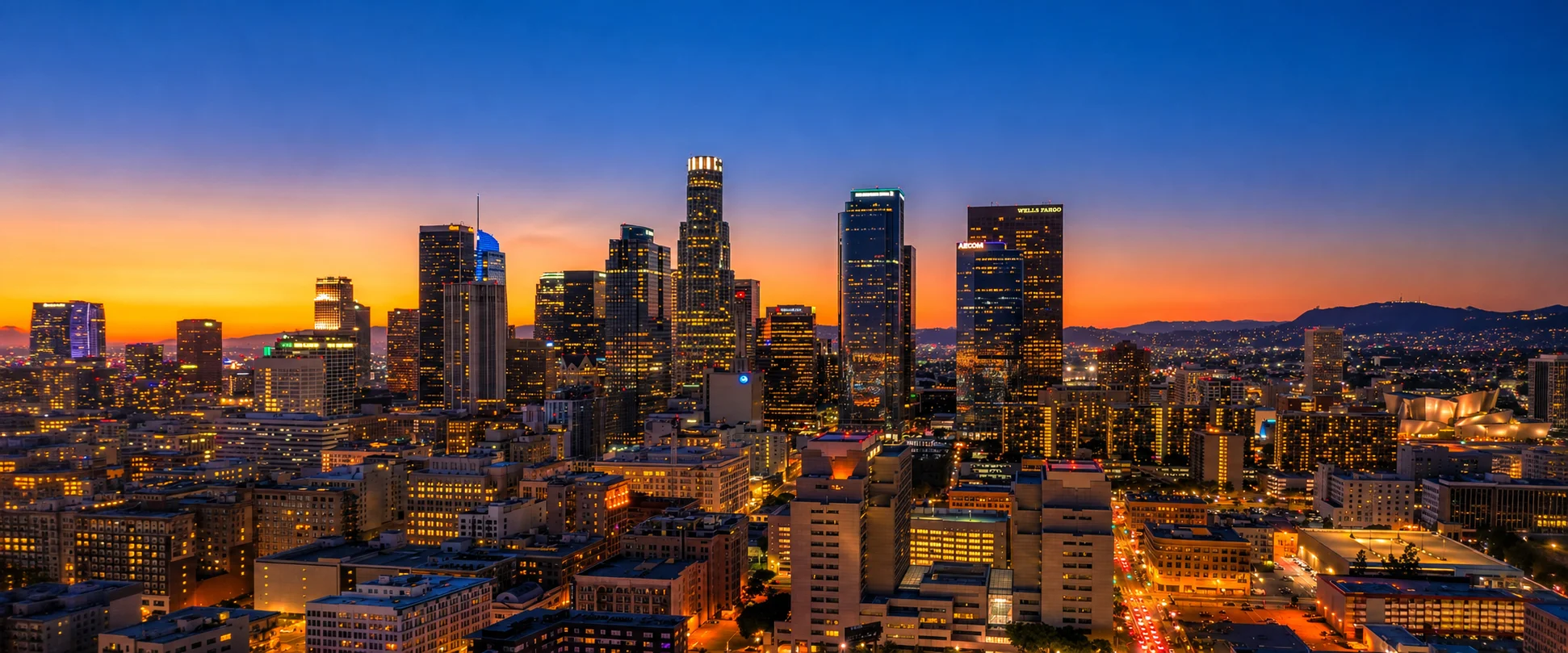
The top things to do in Downtown LA include The Broad for free contemporary art, Grand Central Market for food, Angels Flight (the world’s shortest railway), and the Arts District murals, all within a few walkable blocks. Two to three hours covers the core.
Downtown LA holds the city’s best art, its oldest food hall, and its most photogenic streets, all within a few blocks. That mix makes it an easy add to a first trip, since you can see a lot in one small area.
Downtown Los Angeles has come a long way in the last ten years, from a place people rushed through to one they plan a morning around. DTLA is several small neighborhoods side by side, so picking one pocket and going deep beats trying to see all of it.
Below are the three stops first-timers ask about most, The Broad, Grand Central Market, and the Arts District, plus how to link them and the straight talk on walking, parking, and safety.
If you want to see the rest of LA’s icons in one easy stretch, our Half Day Best of LA Tour covers Beverly Hills and Rodeo Drive, the Santa Monica Pier, The Grove, and Griffith Observatory. You can see the full list of tours here.
Things to Do in Downtown LA: What to Know
Downtown covers a lot of ground, but the parts most first-timers care about cluster on and around Grand Avenue and Broadway. Bunker Hill has the big museums and the concert hall. The Historic Core, a few blocks downhill, has the old theaters, the Bradbury Building, and The Last Bookstore. The Arts District, east of both, brings the murals and the newer restaurants.
A few planning notes before you go:
- Time needed: Two to three hours covers the core sights. A half-day lets you slow down, eat well, and add a neighborhood.
- Best time to go: Late morning into the afternoon, when the museums and Grand Central Market are lively.
- Getting around: Easy on foot within a single neighborhood. Hopping between districts can mean a longer walk or a short rideshare.
If you’re mapping out where Downtown sits alongside Hollywood and the coast, our first-time LA itinerary and travel tips lay out the whole trip.
Grand Avenue: The Cultural Heart of Downtown LA
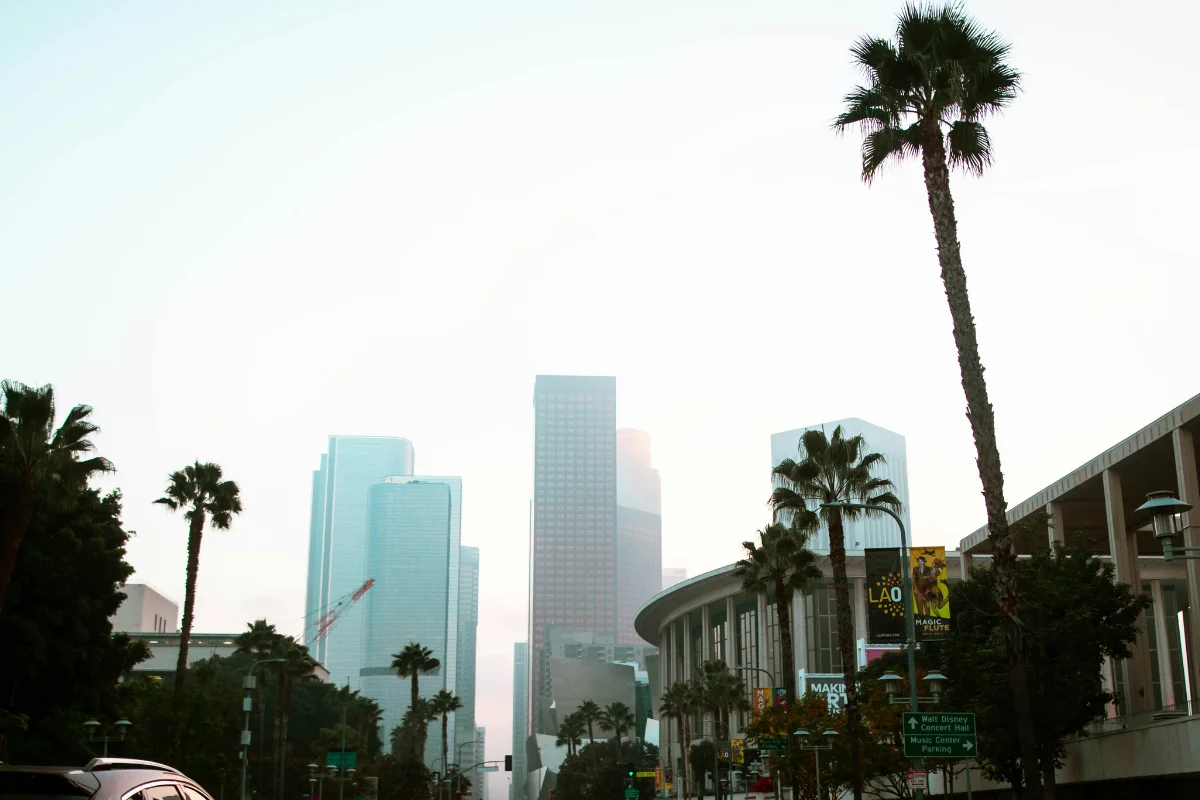
Grand Avenue is the cultural spine of Downtown, and it packs a lot into three blocks. The Broad, MOCA, and Walt Disney Concert Hall sit almost shoulder to shoulder up on Bunker Hill, and most of what’s here costs nothing to walk into.
Visit The Broad
The Broad is the museum most first-timers put at the top of their list, and the building alone is worth the stop. Its white honeycomb shell wraps nearly 2,000 contemporary works, with rooms for Warhol, Basquiat, Jeff Koons, and Ed Ruscha’s LA paintings. It opened on Grand Avenue in 2015 and has drawn crowds since.
General admission is free, which is the part people tend to double-check. Here’s how to get in:
-
- Two ways in: Walk up without a reservation, or book a free timed-entry ticket in advance at thebroad.org to skip the standby line.
- Hours: Tuesday, Wednesday, and Friday 11am to 5pm, Thursday 11am to 8pm, Saturday and Sunday 10am to 6pm. Closed Mondays.
- Extra tickets: If a day looks full, The Broad releases more tickets online daily. Check after 4:30pm for the following day.
- The famous room: Yayoi Kusama’s Infinity Mirrored Room needs a separate free ticket, released monthly on the last Wednesday at 10am Pacific for the following month. Those go fast, so plan for it.
- Hours and ticket-release times can change, so check thebroad.org before your visit.
For more of the city’s art in one trip, check out our guide to the best photography museums and art galleries in Los Angeles.
Walt Disney Concert Hall and the Music Center
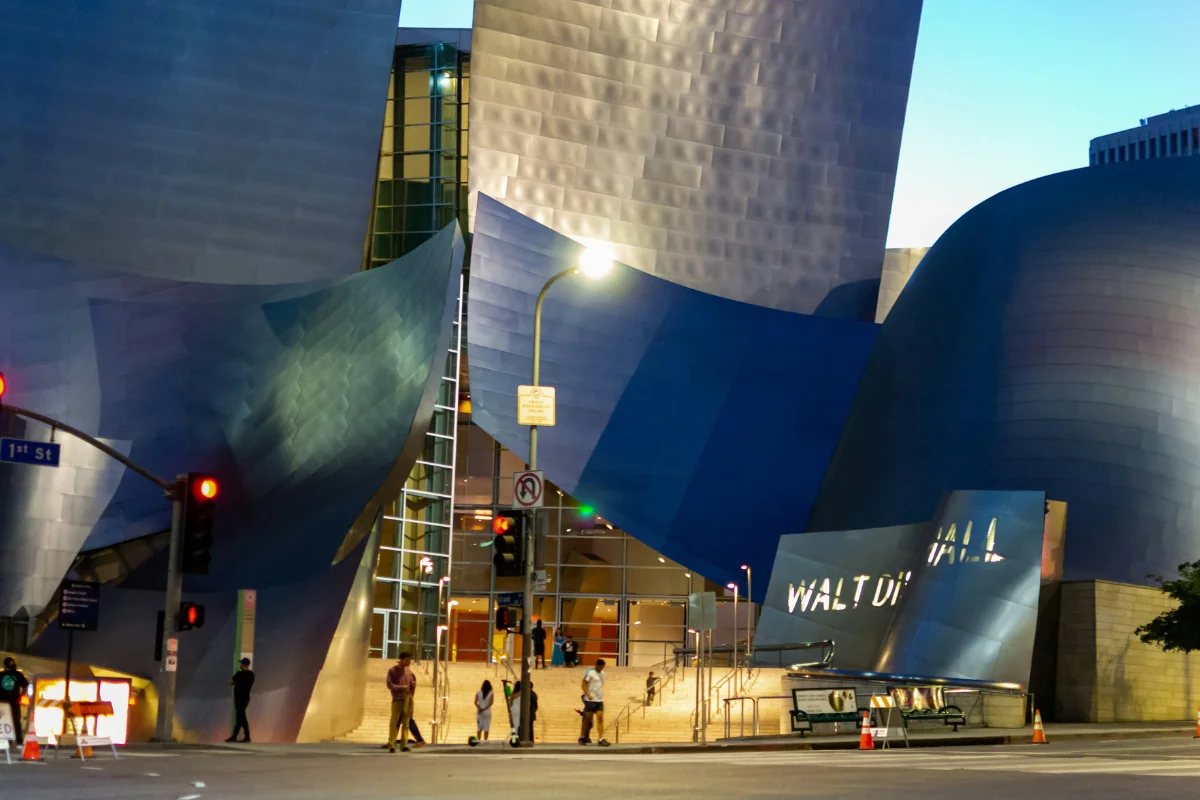
Frank Gehry’s brushed-steel concert hall, home to the LA Philharmonic, opened in 2003 and is the most photographed building Downtown. You don’t need a concert ticket to see inside it. The Music Center runs free self-guided audio tours most days, about an hour long, starting in the Grand Avenue lobby, with start times that vary, so check the schedule first.
Don’t skip the Blue Ribbon Garden on the roof, a free public garden reached by stairs from Grand Avenue, with a fountain shaped like a rose. For the story behind these buildings, our self-guided LA architecture walking tour goes deeper.
MOCA: The Museum of Contemporary Art
A short walk south on Grand sits MOCA Grand Avenue, the Museum of Contemporary Art. General admission is free, courtesy of a museum patron, with a free timed reservation recommended and a limited number of walk-in tickets held back on-site. It pairs naturally with The Broad if you want a second dose of contemporary work, and it lands on our list of the best free things to do in Los Angeles.
Grand Central Market: Where to Eat in DTLA
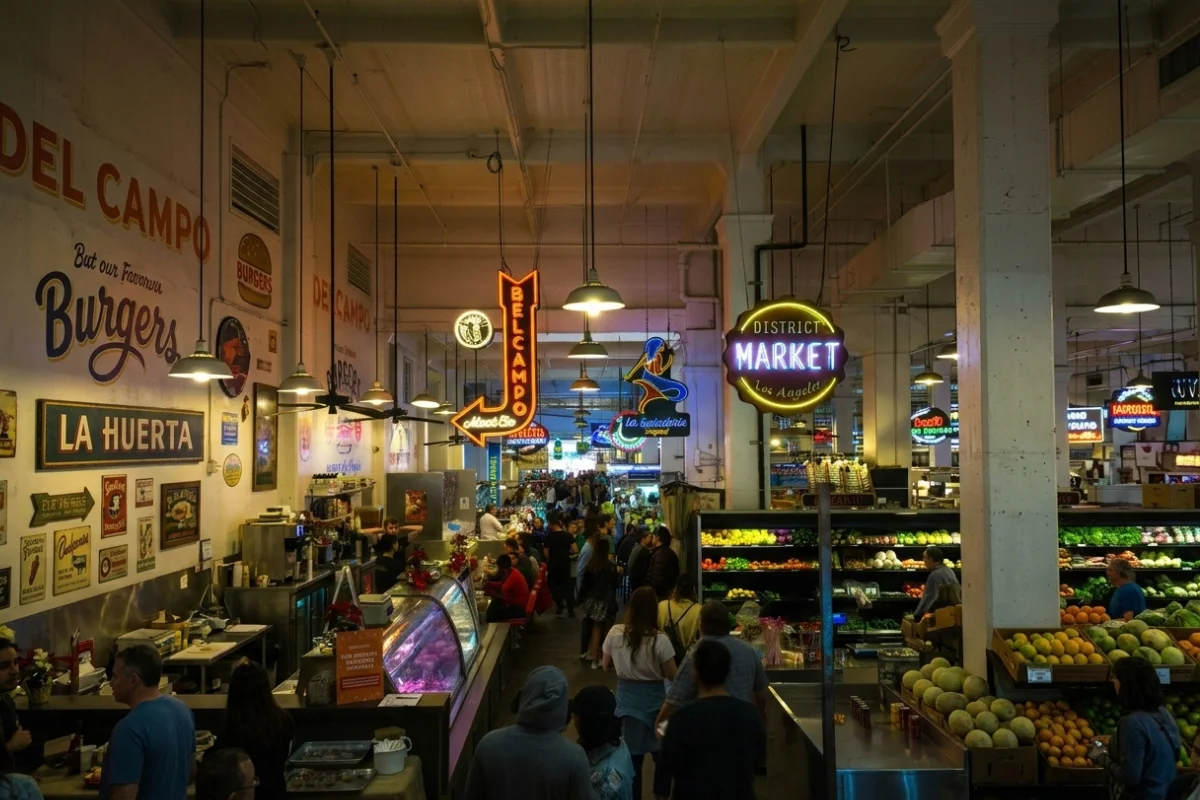
A short walk downhill from Grand Avenue is Grand Central Market, the oldest and busiest food hall in the city. It opened in 1917 inside the Homer Laughlin Building and has fed Angelenos ever since, drawing around two million visitors a year through more than 40 vendors under one roof.
This is an indoor hall of food stalls, not a produce-and-flowers farmers market, and first-timers sometimes mix the two up. If the outdoor version is what you’re after, our LA farmers market guide covers those.
Grand Central Market: What to Know Before You Go
- Hours: Open daily 8am to 9pm, though individual vendor hours vary. Check a specific stall before you count on it.
- Vendors change: The lineup turns over, so rather than send you chasing a stall that may have moved on, we point you to the current vendor directory at grandcentralmarket.com, which shows who’s in the building now, with a map.
- How to do it: Walk the whole hall once before you order, then split a few things across your group instead of everyone getting a full plate.
- Parking: The market’s garage is on South Hill Street, with the first 90 minutes at $5.50.
Ride Angels Flight, the World’s Shortest Railway
Here’s the small, fun detail that ties the two anchors together. Angels Flight is a bright orange funicular on Bunker Hill, opened in 1901 and billed as the world’s shortest railway. Its two cars climb a steep 298-foot track, and you might recognize it from La La Land.
The top station sits at California Plaza near The Broad, and the lower entrance is at 351 South Hill Street, right across from Grand Central Market. So the ride does real work on a DTLA day, carrying you from the art up top to the food down below instead of a climb up the hill. The fare is $1.50 each way, or $3 for a souvenir round-trip ticket, and $0.75 one way with a Metro TAP card. It runs every day from 6:45am to 10pm.
The Arts District: Murals and LA’s Creative Side
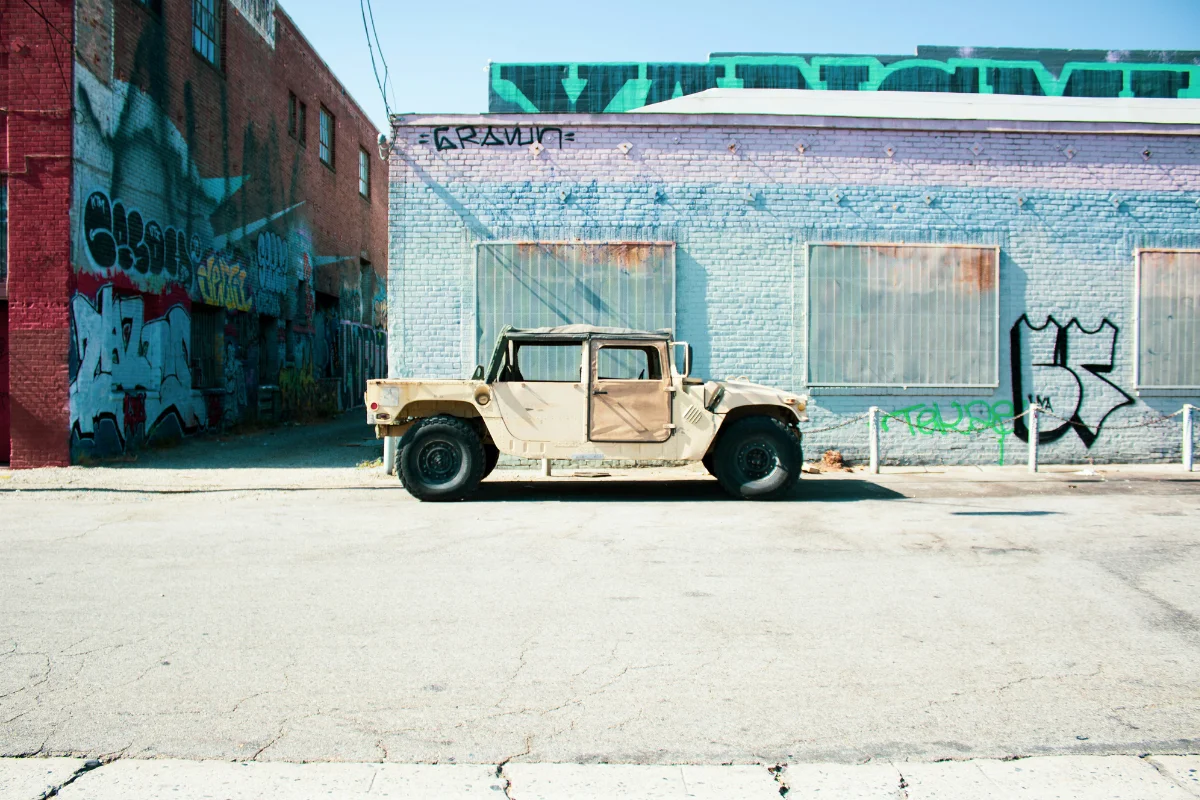
East of the Historic Core, the Arts District trades museums for street art. Old warehouses now hold galleries, coffee roasters, breweries, and restaurants, and the building walls double as an open-air mural collection that shifts from year to year. It’s the most photogenic corner of Downtown and the one that feels least like anywhere else in LA.
Plan this as a wander rather than a checklist. Give yourself an hour to walk the blocks, duck into a gallery, and stop for a coffee or a scoop of ice cream. Because the food and gallery lineup changes often, glance at what’s open the week you visit. The murals here also make the Arts District a favorite in our roundup of the best photo spots in Los Angeles.
Exploring Downtown LA’s Historic Core
Between Bunker Hill and the Arts District, the Historic Core holds the early-1900s Downtown that most people picture from old movies. Two stops stand out for first-timers.
The Bradbury Building
From the street, the Bradbury Building looks like an ordinary brown brick office block. Step inside and you’re under a five-story skylit atrium of wrought-iron railings, marble stairs, and open-cage elevators, built in 1893 and lit up gold in the afternoon. Film fans know it as a backdrop in Blade Runner and more than 100 other movies.
It’s still a working office building, so the upper floors are private, but visitors can walk into the ground floor and first landing for free during the day. It sits at Third and Broadway, across from Grand Central Market, which makes the two an easy pair. It’s one of the LA filming locations you can visit without a studio ticket.
The Last Bookstore
A few blocks away, The Last Bookstore fills a former bank with California’s largest independent collection of new and used books. Upstairs you’ll find the much-photographed book tunnel and a maze of themed rooms and art. It’s free to browse, and it’s an easy, low-key stop between bigger sights. If you like the offbeat side of the city, it’s one of our favorite LA hidden gems.
El Pueblo de Los Ángeles and Olvera Street
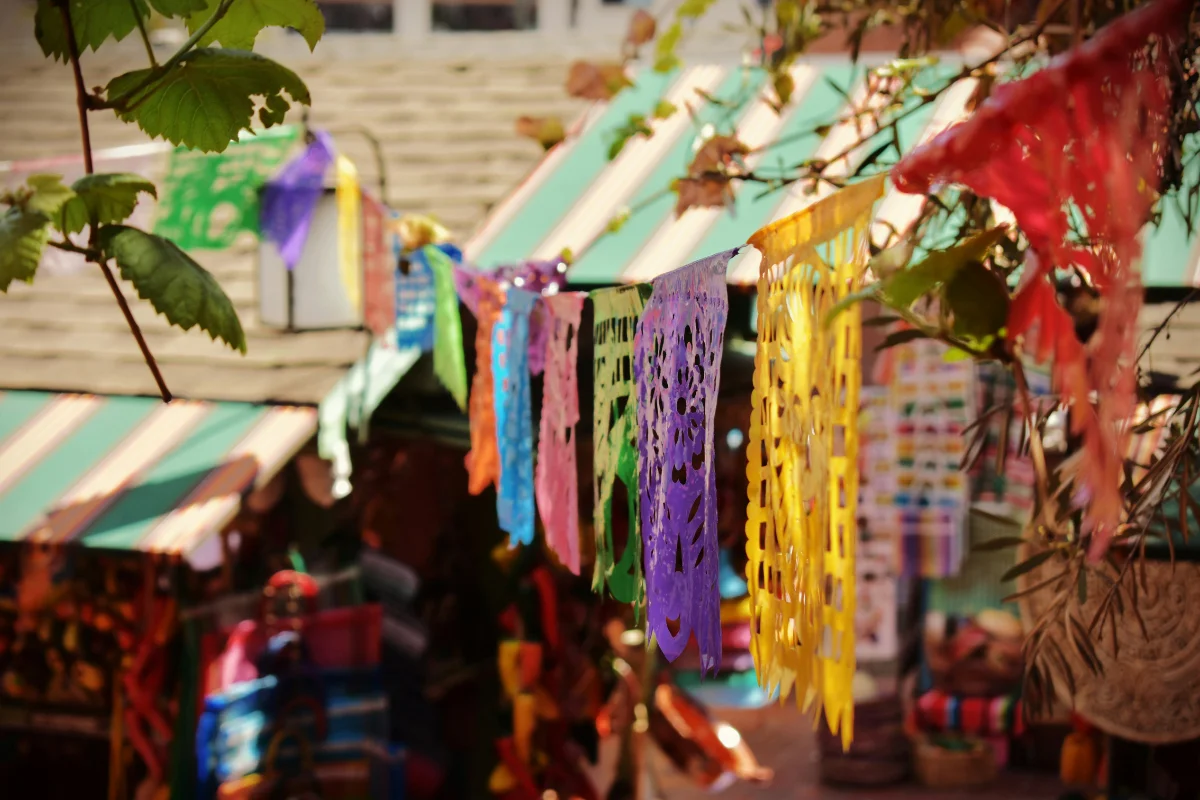
Near Union Station sits the oldest part of the city. El Pueblo de Los Ángeles marks the spot where Los Angeles was founded in 1781, and Olvera Street, a Mexican marketplace that opened here in 1930, runs through the middle of it, lined with stalls, food, and historic buildings.
Step into the Avila Adobe, LA’s oldest standing house, built in 1818 and free to visit. The plaza also runs free 50-minute walking tours of the old buildings on most weekdays, a low-cost way to get the history straight from a docent.
Little Tokyo, Chinatown, and Union Station
Two of Downtown’s most walkable cultural neighborhoods are close by. Little Tokyo and Chinatown both reward an unhurried stroll, with strong food, small shops, and festivals through the year. Union Station, the city’s grand historic rail hub, is worth a look for the architecture alone and is where many visitors arrive by Metro or Amtrak.
If you have more time, L.A. Live near the arena district holds the Grammy Museum, and the nearby Fashion District is a busy stretch of wholesale shopping. Both make a fine detour rather than a must-do. If you’re staying longer, our 7-day LA itinerary works these neighborhoods into a fuller trip.
Getting to Downtown LA and Getting Around
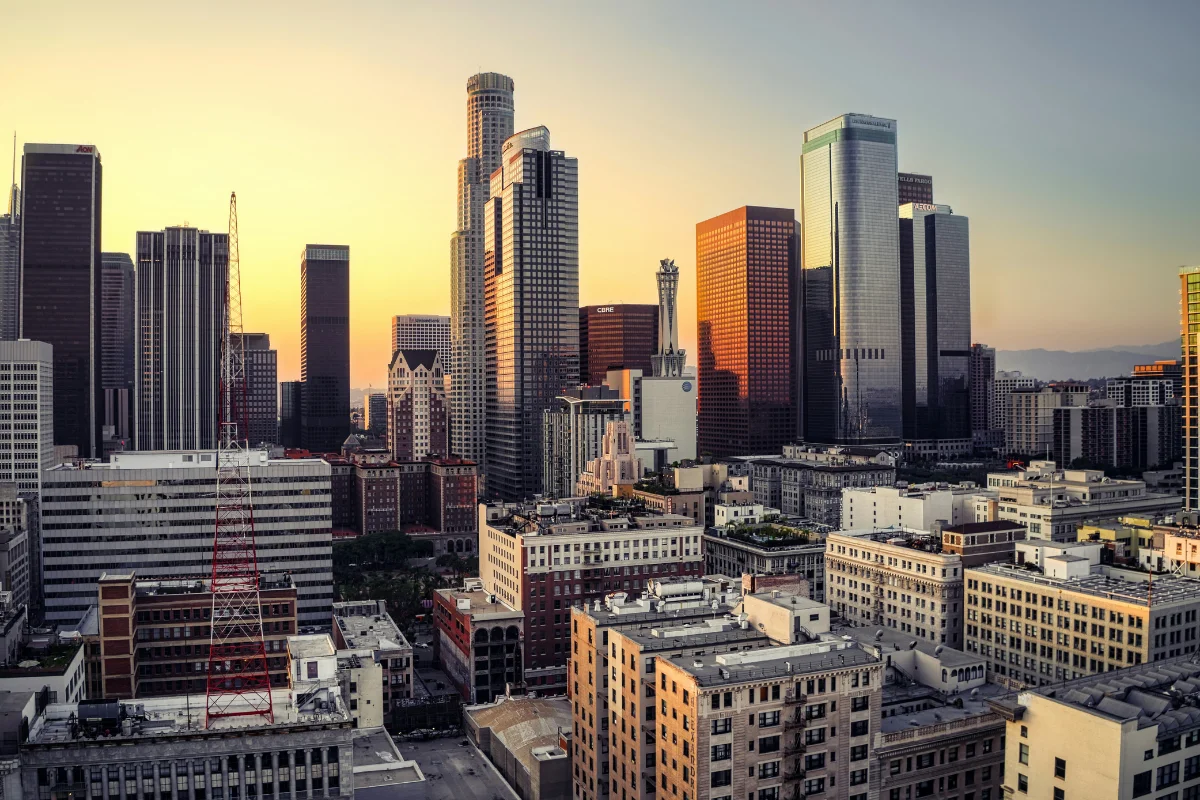
Downtown is one of the few parts of LA you can explore on foot, at least within a single neighborhood, which is rare for this city. Metro reaches it well, with Pershing Square and Union Station as handy entry points, and a TAP card covers the trains plus the Angels Flight discount. If you drive in, expect to pay for parking and leave the car in one garage rather than move it around. Our full guide to getting around Los Angeles without a car has more.
Is Downtown LA Safe?
Downtown is busy and well-visited by day, and the areas above are fine to explore with normal big-city awareness. Keep a first visit to daylight hours, stick to the neighborhoods people recommend, and stay aware of your surroundings the way you would in any large city. Skid Row, an area of concentrated homelessness east of the Historic Core, is one most visitors route around. A little planning is all it takes.
How Downtown Los Angeles Fits Your First LA Trip
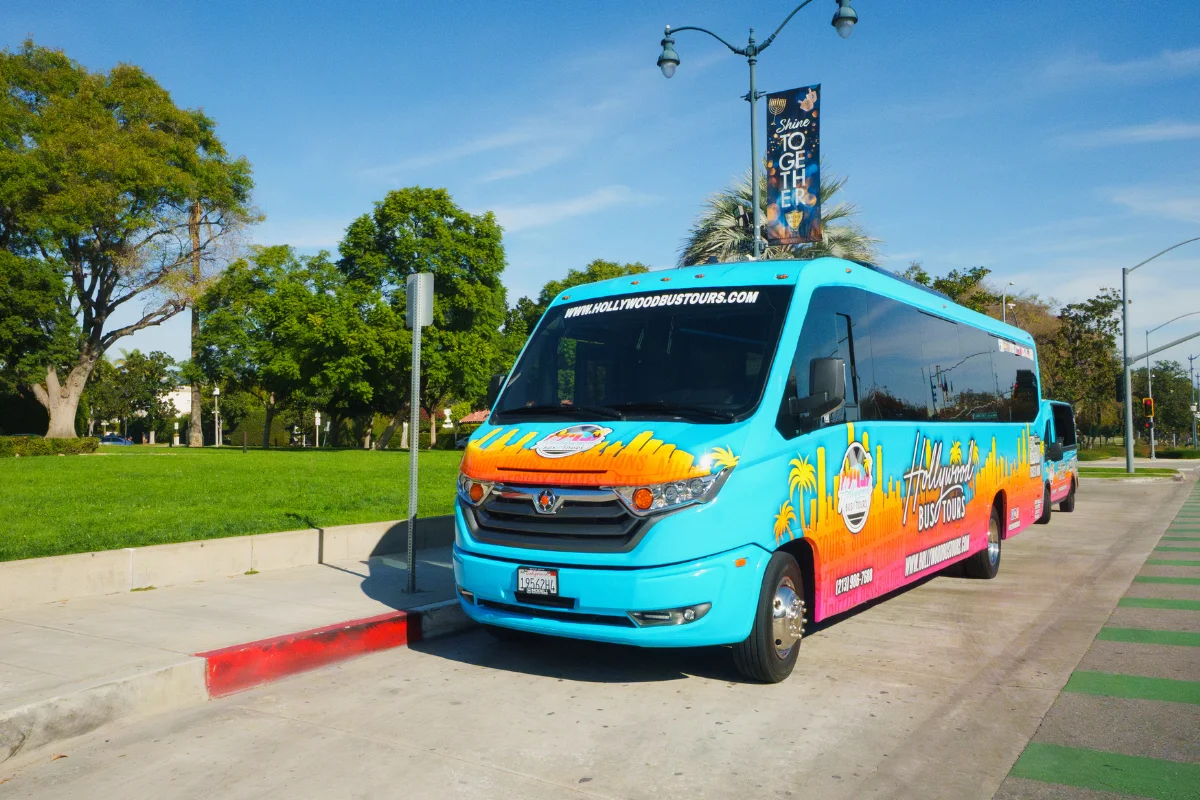
Downtown Los Angeles is your walkable, do-it-yourself morning, and it stands on its own. The rest of LA is the part that spreads out. Hollywood, the Hollywood Sign views, Beverly Hills, the celebrity neighborhoods, and the coast sit miles apart, which is where a car turns into a full-time job.
Our Half Day Best of LA Tour covers those far-flung stops with a local guide driving, from Beverly Hills and Rodeo Drive to the Santa Monica Pier, The Grove, and Griffith Observatory. If Hollywood and celebrity homes are the priority, the Hollywood, Beverly Hills & Celebrity Homes Tour is the one first-timers book most, and a big reason we’ve earned 20,000+ five-star reviews.
Downtown LA FAQ
Is Downtown LA worth visiting for first-time tourists?
Yes, especially if you want a walkable day. Grand Avenue holds The Broad, MOCA, and Walt Disney Concert Hall within a few blocks, Grand Central Market is a short walk away, and much of it is free. Two to three hours covers the core, and a half-day lets you add the Arts District.
How much does The Broad cost?
General admission to The Broad is free. You can walk up or reserve a free timed ticket in advance at thebroad.org. Yayoi Kusama’s Infinity Mirrored Room needs a separate free ticket, released monthly on the last Wednesday at 10am Pacific for the following month.
Is Grand Central Market free to enter?
Yes. Grand Central Market is free to walk through, and you only pay for what you eat or buy. It’s open daily from 8am to 9pm, though individual vendor hours vary, so check a specific stall before you go.
Is Downtown LA walkable?
Within a single neighborhood, yes, which is rare for Los Angeles. Bunker Hill, the Historic Core, and the Arts District are each easy on foot. Traveling between districts can mean a longer walk or a short rideshare.
How do I get from The Broad to Grand Central Market?
It’s a short walk downhill, or you can ride Angels Flight, the funicular whose top station sits near The Broad and whose lower entrance is right across from Grand Central Market. The fare is $1.50 each way.
How much time should I spend in Downtown LA?
Two to three hours covers the main sights on Grand Avenue plus Grand Central Market. A half-day lets you slow down, eat well, and add the Arts District or another neighborhood.